
Republic Republic Republic
  • Log in
Open account
Oops! We couldn’t find any results...
Can’t find a deal? Try advanced search.
Is something missing? Add your suggestion here.
Primary market Live deals Trading Buy and sell Republic Note Own a piece of Republic's upside
Republic Ventures Opportunities for accredited investors
Republic Capital Multi-stage venture firm
Wallet Manage your digital assets Mobile app Available on iOS or Android Learning center Explore investor resources FAQ Get your questions answered
Capital fundraising Raise on Republic Tokenized assets Design, launch, manage tokenized assets Sharedrops Gift equity as a reward Founder Academy A complete guide to raising funds
Advisory Access veteran web3 advisors Infrastructure Stake your digital assets Tokenization Deploy your assets on-chain
Republic Capital In-house Venture Capital fund Broker dealer Regulated capital services
Republic Republic Republic
Oops! We couldn’t find any results...
Can’t find a deal? Try advanced search.
Is something missing? Add your suggestion here.
  • US

  • Log in
  • Open account
All investors
Primary market Live deals Trading Buy and sell
Republic Note Own a piece of Republic's upside
Accredited only
Republic Ventures Opportunities for accredited investors
Institutional
Republic Capital Multi-stage venture firm
More
Wallet Manage your digital assets Mobile app Available on iOS or Android Learning center Explore investor resources FAQ Get your questions answered
Growth capital solutions
Capital fundraising Raise on Republic Tokenized assets Design, launch, manage tokenized assets Sharedrops Gift equity as a reward Founder Academy A complete guide to raising funds
Web3 services
Advisory Access veteran web3 advisors Infrastructure Stake your digital assets
Tokenization Deploy your assets on-chain
Institutional services
Republic Capital In-house Venture Capital fund
Broker dealer Regulated capital services
Logo of Lumida Wealth

Lumida Wealth

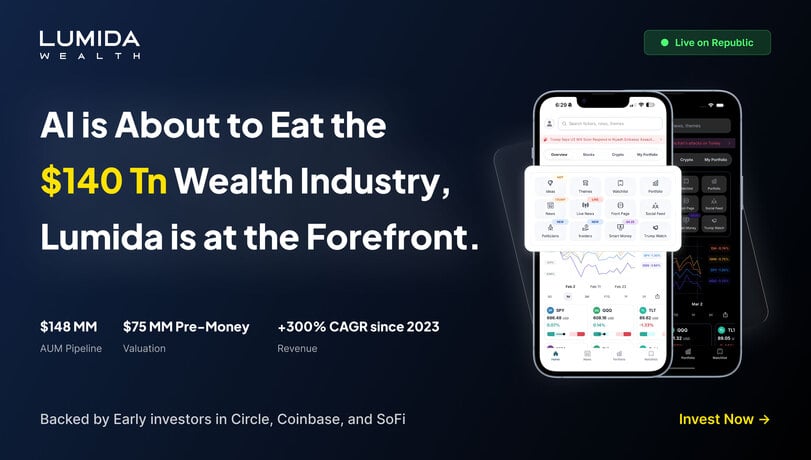
Lumida is Scaling. Invest in the AI Platform Disrupting the $140 Trillion Wealth Industry.
Wealth Management B2C AI & Machine Learning Security
Facebook Telegram Twitter LinkedIn
Featured image of Lumida Wealth
$445,769
8% raised of $5M max
85
Investors
25 days
Left to invest
Invest in Lumida Wealth
$96.72 minimum investment · Deal terms
Pitch Discussion 39 Updates 1 Reviews 15
Invest Invest in Lumida Wealth
Facebook Telegram Twitter LinkedIn
Opportunity Traction Investors Recognition Community Lumida Invest AI Advisor Biz. model
About Team FAQ Risks Discussion

Documents

Republic (OpenDeal Portal LLC, CRD #283874) is hosting this Reg CF securities offering by Lumida Inc. View the official SEC filing and all updates:
Official SEC Logo Form C SEC.gov
Company documents
Subscription Agreement Lumida - Form C_A .pdf
Loading

Hear from some of the 85 investors in Lumida Wealth


Show more

Highlights


Boomers had Schwab. Millennials had Robinhood. The AI generation gets Lumida.

  • Backed By investors who sat on boards of Coinbase, Circle & SoFi.
  • Lumida Invest: The AI app built to replace your advisor, trader, analyst.
  • We are accelerating. Revenue tripled 2 years in a row.*
  • Last 3 Months: 4x'd the team. 10x'd the pipeline. Grew to 60K+ followers.
  • Built $148M AUM pipeline in one quarter, worth potentially $9M in value.*
  • Tesla, SoFi built by “word of mouth” communities. Now ours owns Lumida.

*Past performance is not indicative of future results

Opportunity


AI Will Eat Wealth Management

Every generation, a new technology disrupts an entire industry. 

The computer. The internet. Now AI.

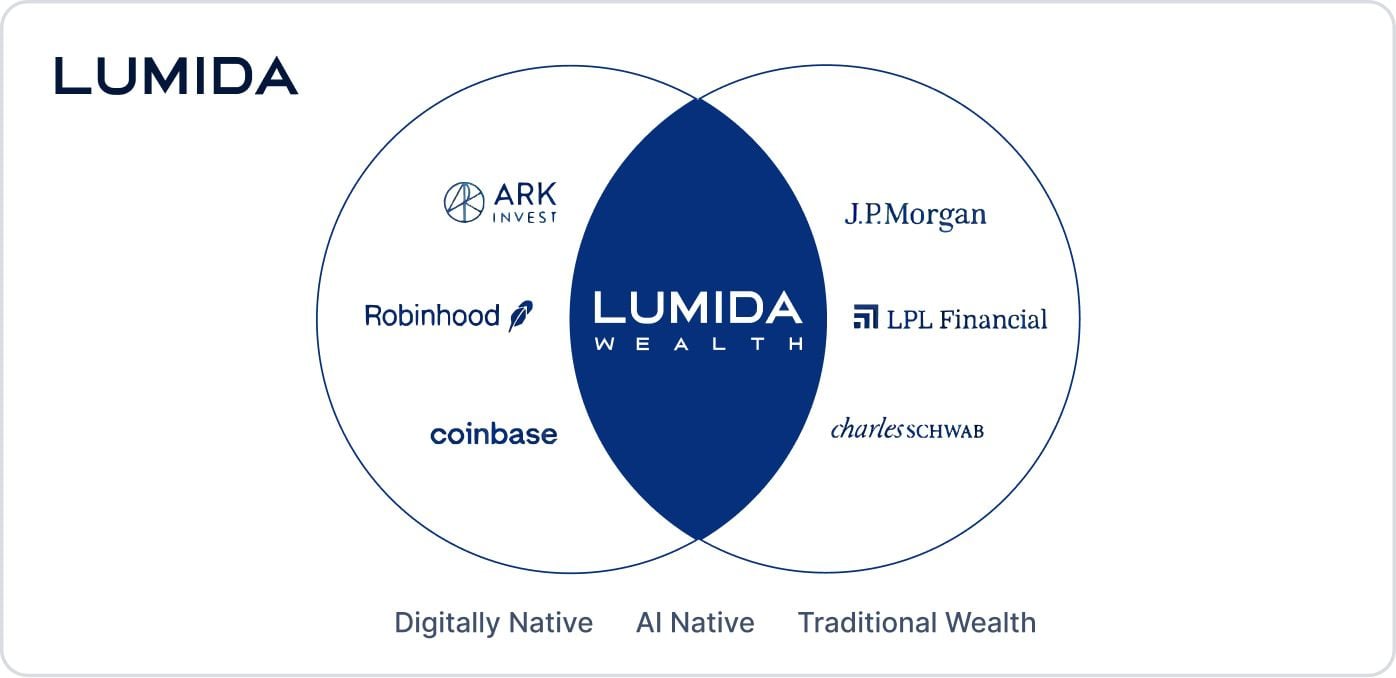
Lumida is building the future of wealth management. We believe AI native wealth managers will outperform traditional firms with 1/100th the headcount. 

Meanwhile, $84 trillion in wealth is transferring to a generation that lives online. They don't watch CNBC. They don't want the US Open with a banker. They get news on TikTok, learn on YouTube, and want investing in the palm of their hand.


Old-school wealth managers haven't adapted. They're losing this generation by default.


Lumida is built for the AI Generation.
Traction


Our Traction Is Strong

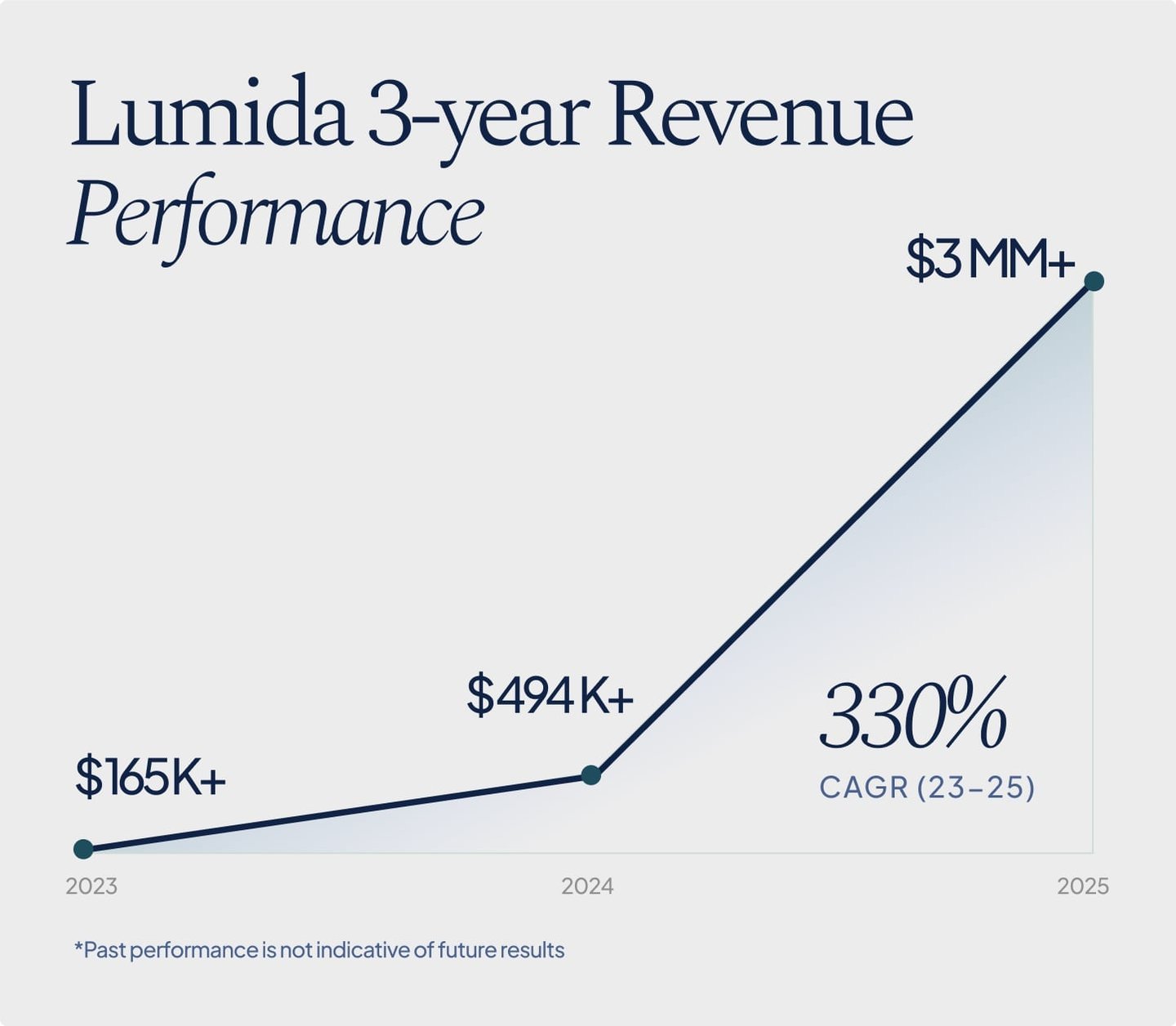
2025 was a huge year for Lumida. Revenue up, traction accelerating.

Lumida has completed the hardest part. The "Zero to One" journey. In less than three years, we've built a brand, a community, and a track record.
Investors


We Have World Class Investors

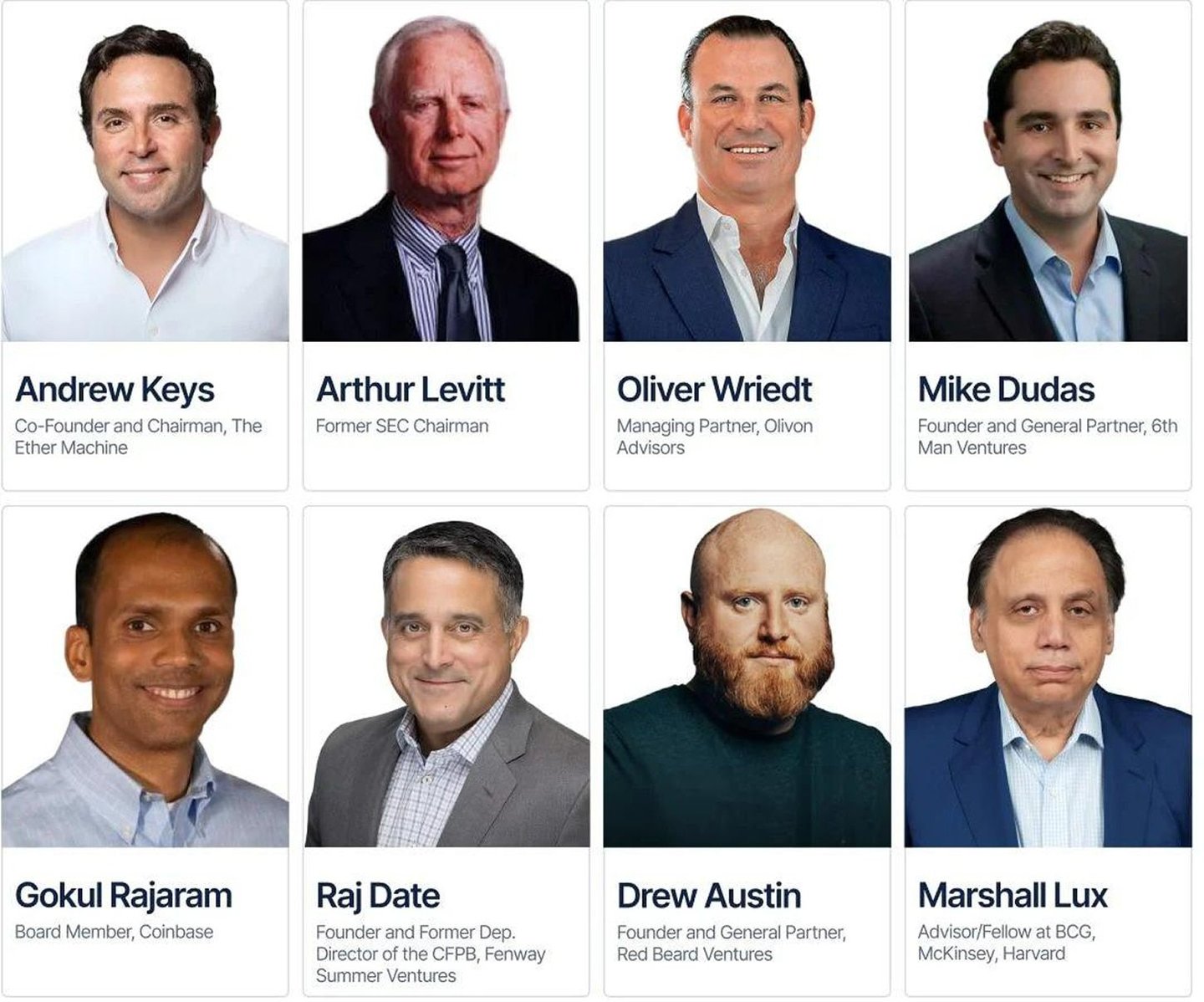
Lumida is backed by investors with board level experience at Circle, Coinbase, and SoFi before they went public. 
Recognition


Lumida Recognition

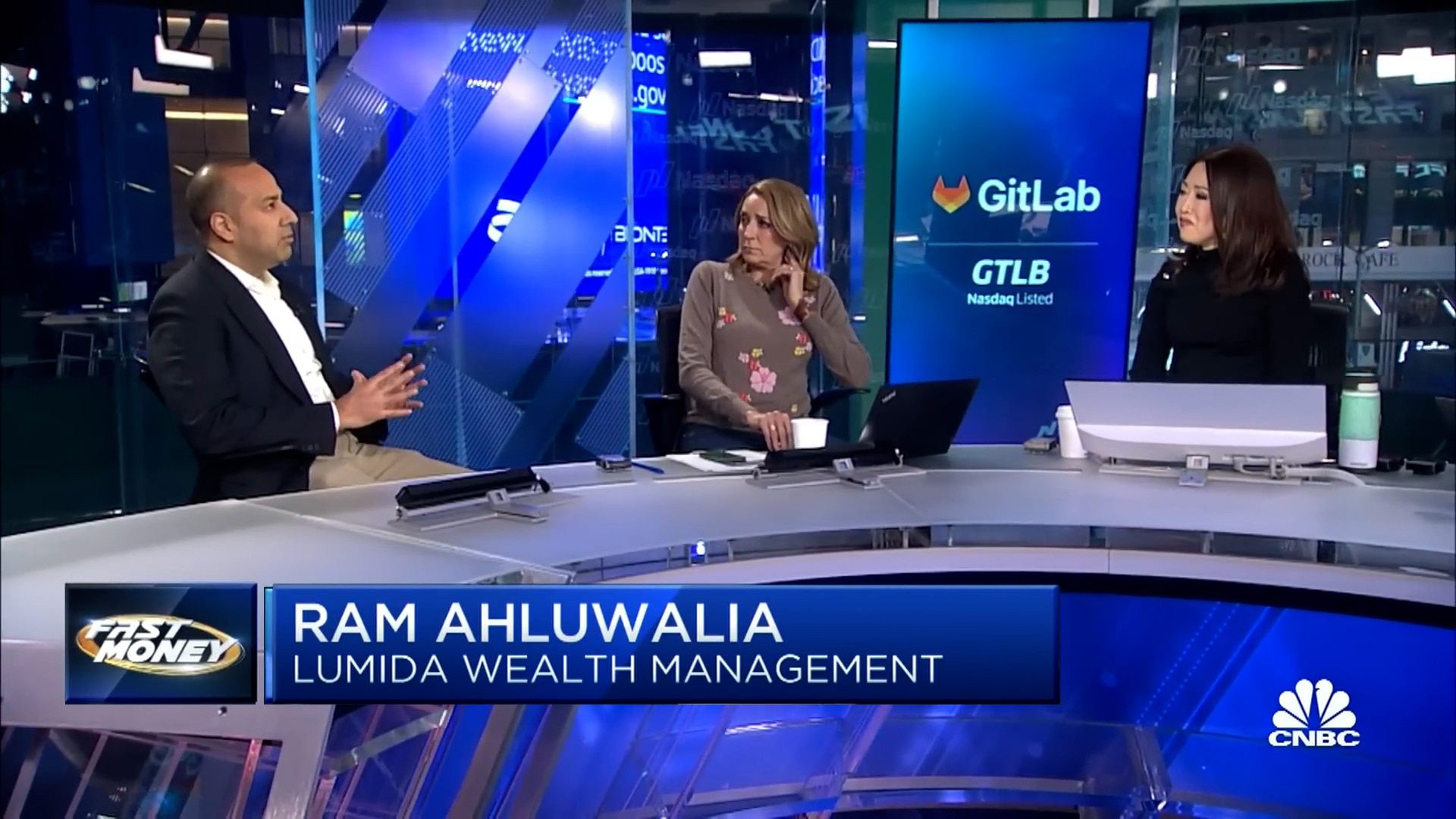
Lumida is a regular voice on the podcasts investors listen to. Lumida's thought leadership has been published in the WSJ and American Banker.
Community


What People Say About Lumida

Don't take our word for it. Here's what investors are saying:

Individuals providing testimonials have not been compensated for their statements

Lumida Invest


Lumida Invest: Trade Smarter. Build Wealth.
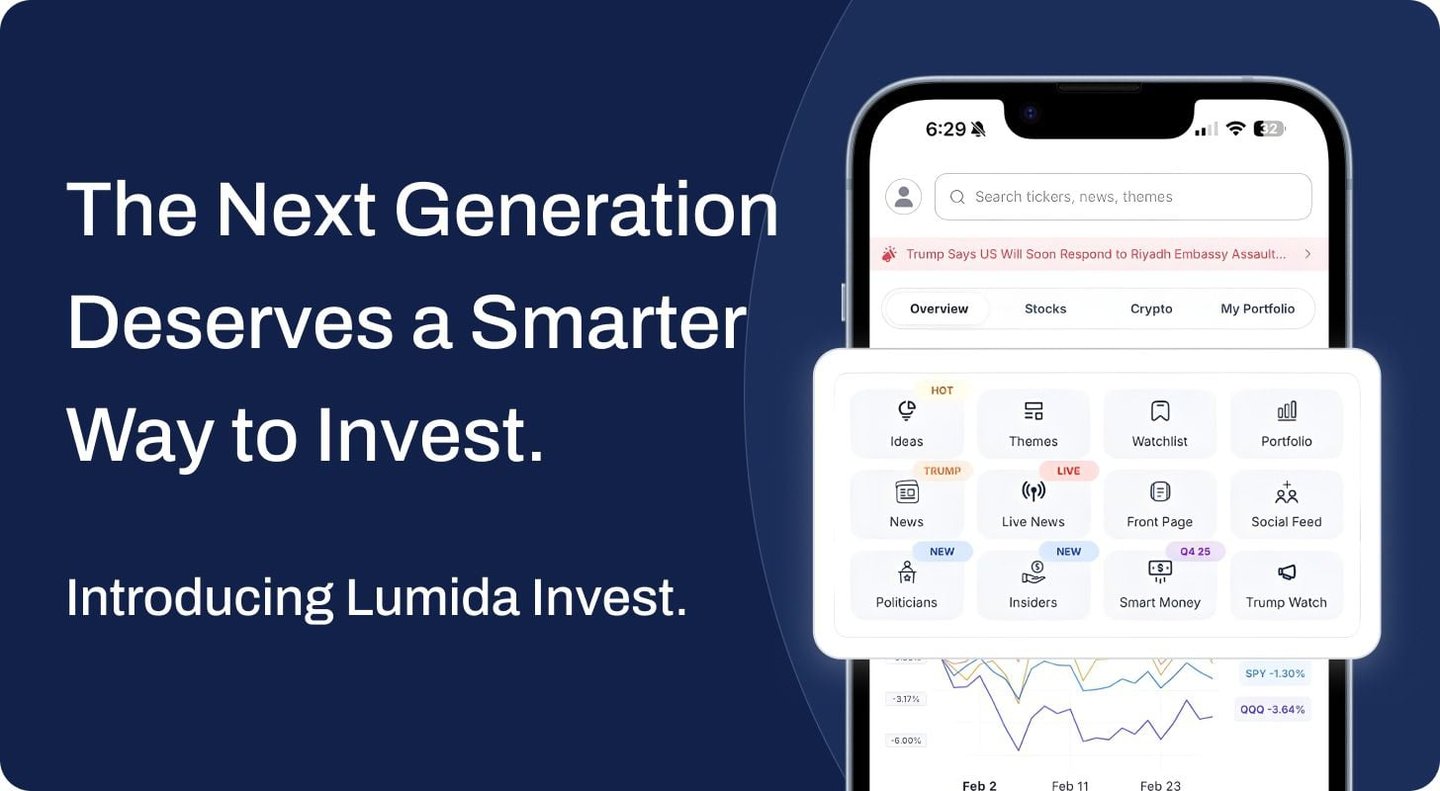

Robinhood made trading accessible. Lumida makes it intelligent.


Today, Lumida Invest gives every user AI-powered analysis on every trade. The kind of intelligence that used to require a Goldman wealth desk.


But trading is just the start. Lumida is built for the full investor lifecycle: trades, long-term portfolios, tax strategy, and wealth-building.


Next: AI advisors that handle the work your human advisor charges 1% for.


Here's what that looks like:

Identify emerging themes and market shifts before the crowd does
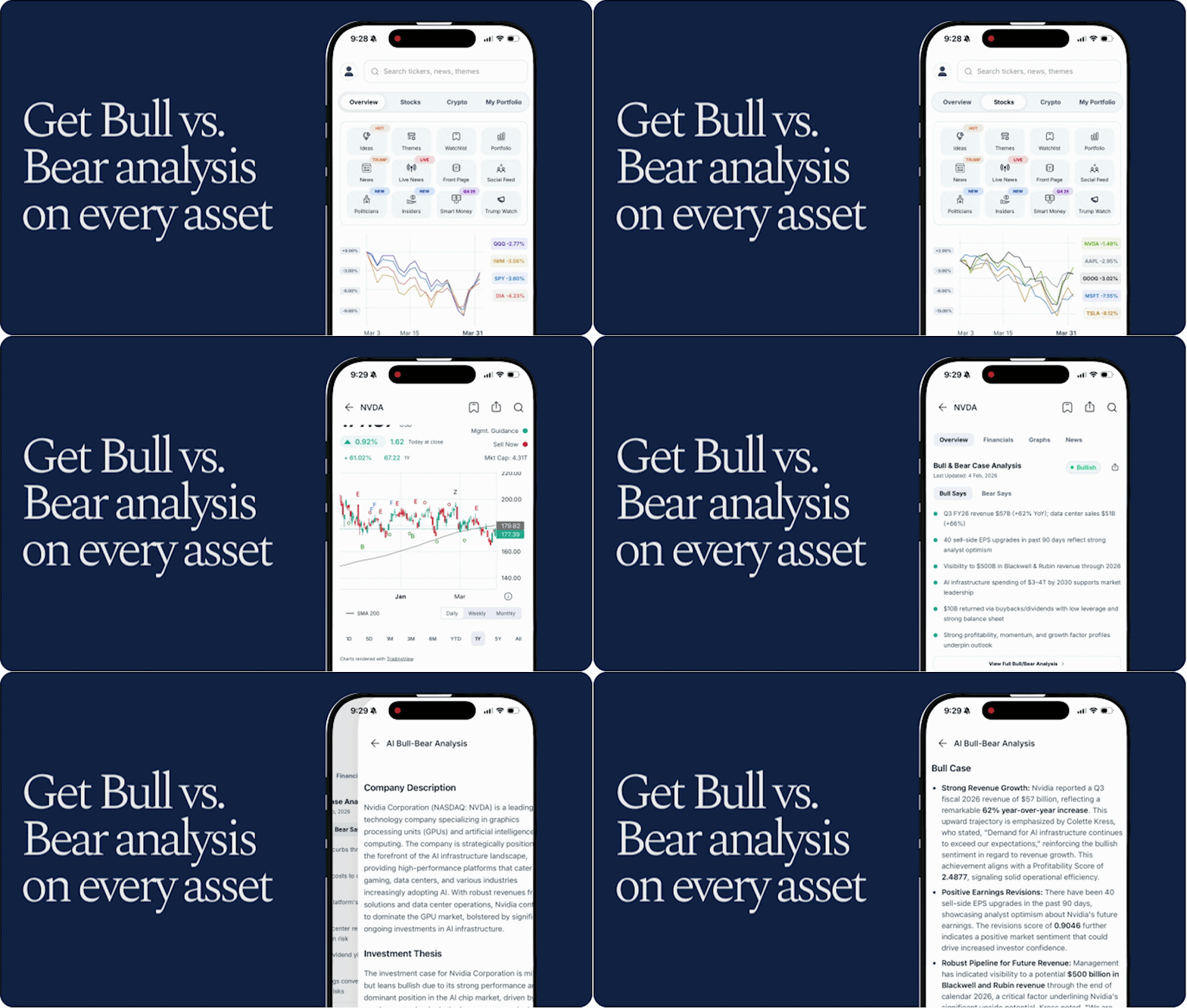
Your AI analyst - always on, always ahead
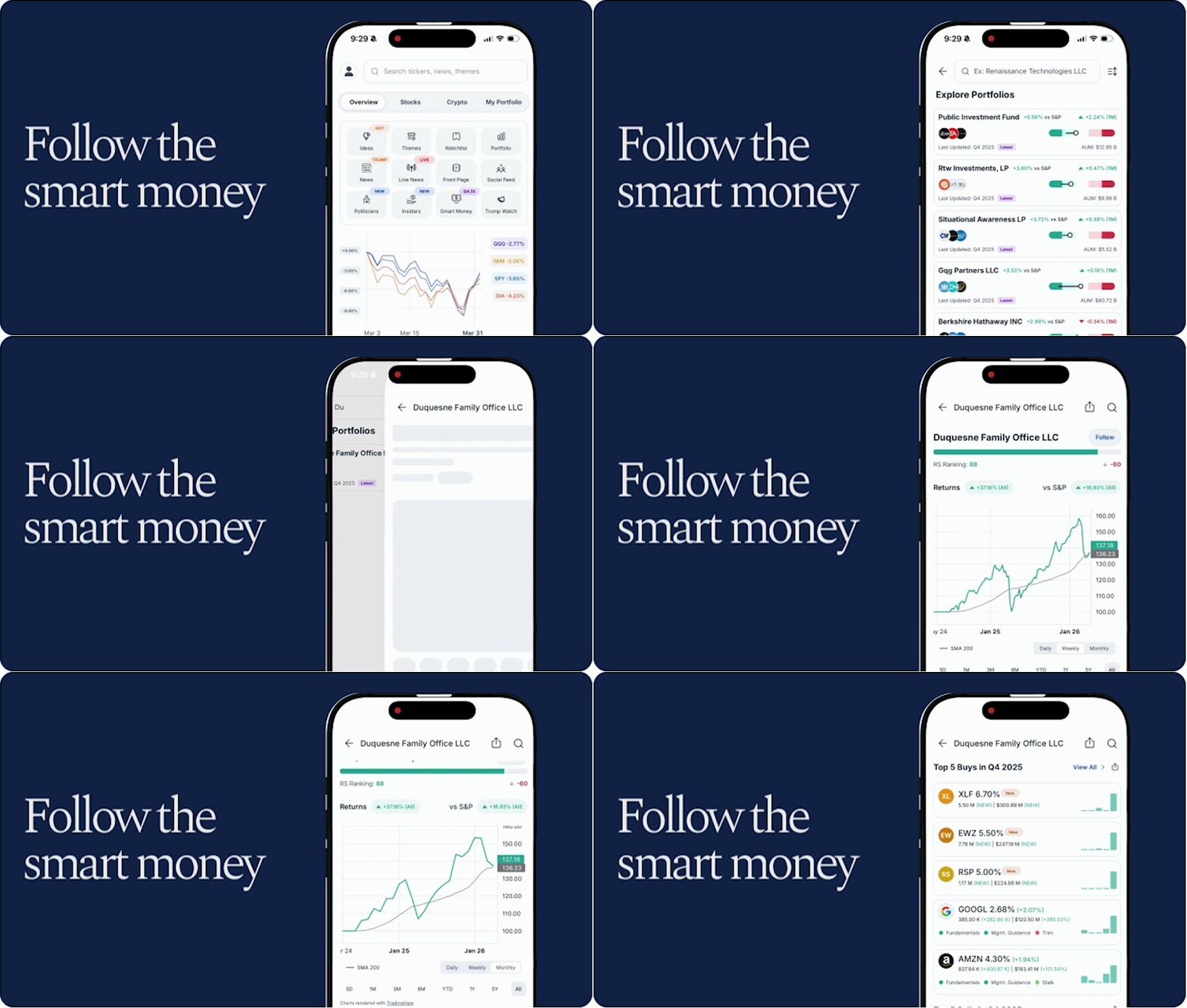
Track the moves of Warren Buffett and leading hedge fund managers

AI confirms your instincts with clear buy and sell signals.


AI Advisor


Lumida is building the AI Advisor for the AI generation


Wealth management hasn't changed in 50 years. You pay 1% to a human advisor who reviews your portfolio quarterly and refers you out for everything else.

Lumida Invest changes the model entirely. An AI agent that knows your full financial picture and can guide you. 

Available 24/7, at a fraction of the cost.

Your AI agent suggests what to buy or sell, harvests losses, and minimizes capital gains.

That's what we're building next. And people who got early access can't stop talking about it:
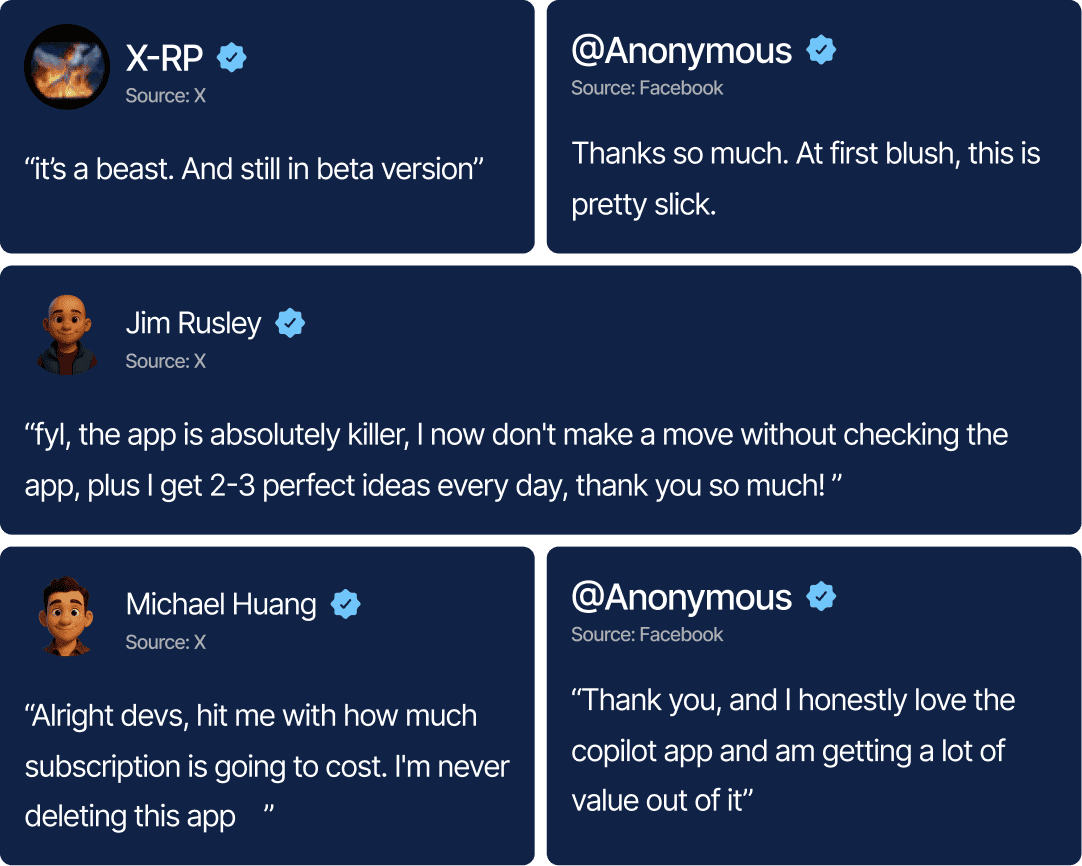
*The individuals providing testimonials have not been compensated for their statements.

Business Model


How Lumida Compounds

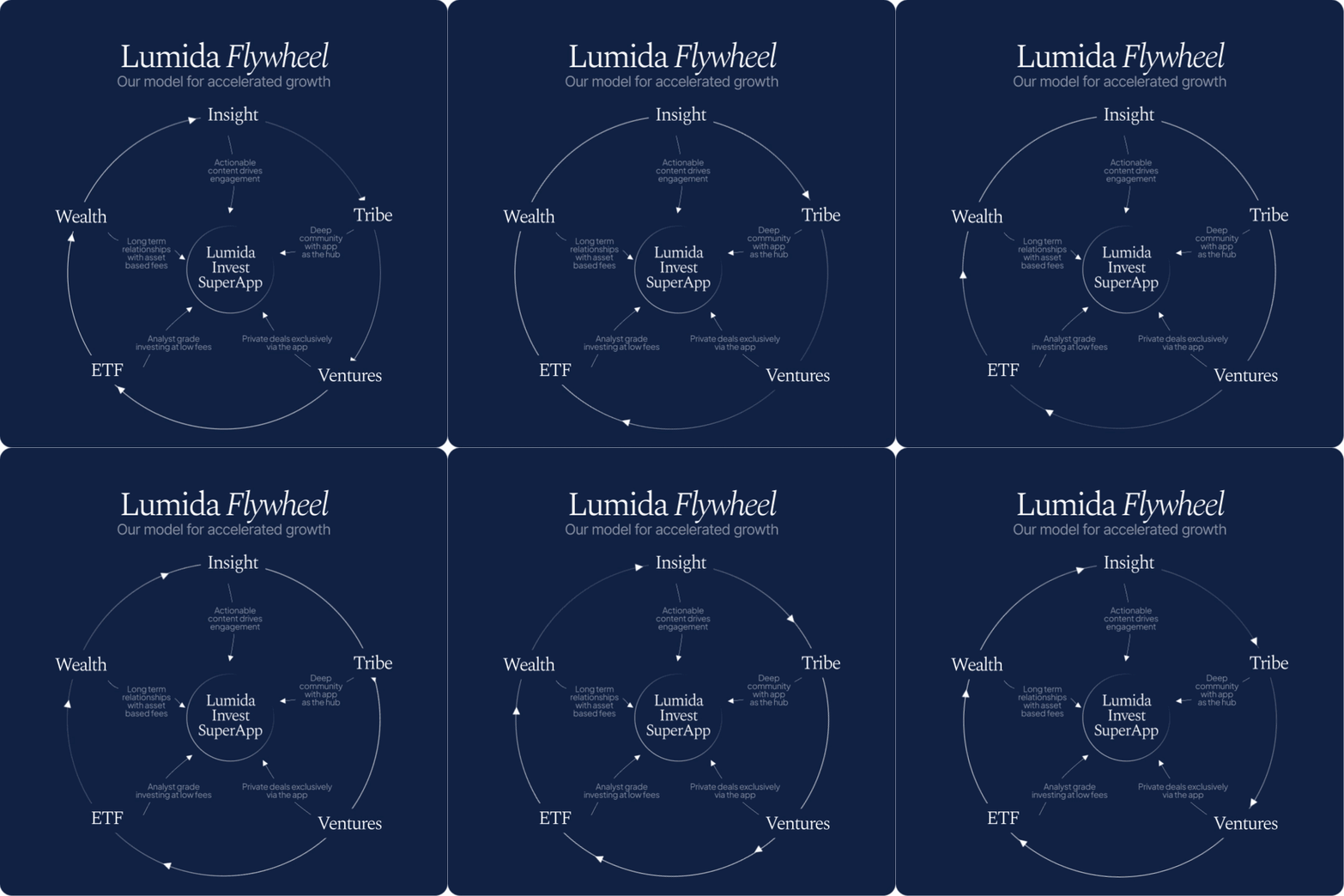
The Lumida Flywheel

Most wealth managers offer services. Lumida is a Wealth Architect - a self-reinforcing flywheel with AI at the center, designing every piece of your financial life into a single system.


  • The Lumida Invest app brings users in.
  • Our content earns their attention.
  • The Tribe turns them into a community.
  • Our community got CoreWeave before its IPO through Lumida Ventures.
  • Lumida Wealth manages it for the long term.
  • A future Lumida ETF will open access to every investor.


Every piece reinforces the next. AI compounds every turn.

Every Lumida investor is also a Lumida ambassador. Owners become users. Users become owners.


The conversation about Lumida happens at kitchen tables, in group chats, and across social feeds - by people who have a stake in our success.


That's the SoFi and Tesla playbook. Community as the growth engine, with ownership as the accelerant.


Our vision is to grow exponentially, and set the stage for a potential public market exit down the road.

The flywheel is built. The AI platform makes it spin faster. Our community makes sure it never stops.


*The individuals providing testimonials have not been compensated for their statements.

$

Deal terms


Security type
Common Stock shares
Common stock issued by Lumida Inc
Learn more
Funding range
$75K / $5M
100% of $75K minimum offering amount has been reached.

The maximum amount the offering can raise is $5M.
Learn more
Minimum investment
$96.72
The smallest investment amount the issuer is accepting in this offering.
Valuation
$75,000,000
Deadline
July 7, 2026
Lumida Wealth campaign will end on .
Learn more
How it works

Documents

Republic (OpenDeal Portal LLC, CRD #283874) is hosting this Reg CF securities offering by Lumida Inc. View the official SEC filing and all updates:
Official SEC Logo Form C SEC.gov
Company documents
Subscription Agreement Lumida - Form C_A .pdf

Bonus perks

In addition to your Common Stock shares, you'll receive perks for investing in Lumida Wealth.
Invest
$10,000
Receive
  • One year free Lumida Invest app access
  • Free Lumida Ledger newsletter subscription
  • Lumida T-Shirt
  • First notice on Venture deals (For qualified and accredited investors)
  • Access to Lumida events & conferences
Invest $10,000

About Lumida Wealth

Legal Name
Lumida Inc
Founded
Jul 2022
Form
Delaware Corporation
Employees
20
Website
lumidawealth.com
Social Media
Headquarters
Google Map location of of Lumida Wealth
1200 Preakness Avenue 2nd Floor, Suite B1200 , Wayne, NJ
Headquarters
1200 Preakness Avenue, 2nd Floor, Suite B1200, Wayne, NJ, United States 07470

Lumida Wealth Team
Everyone helping build Lumida Wealth, not limited to employees

Profile picture of Rasik Sharma
Rasik Sharma
VP, Investment Advisor
Profile picture of Ram Ahluwalia
Ram Ahluwalia
Founder & CEO
Profile picture of Christopher Acquaviva
Christopher Acquaviva
VP Private Clients
Profile picture of Nicollina Delgadillo
Nicollina Delgadillo
VP, Strategic Accounts
Profile picture of Reegan Capozzoli
Reegan Capozzoli
VP, Investment Advisor
Profile picture of Raymond Samuels
Raymond Samuels
Senior Investment Advisor
Profile picture of Shikhar Gupta
Shikhar Gupta
Research Analyst to CIO
Profile picture of Zach  Bleeker
Zach Bleeker
Client Associate
Profile picture of Kamila Bautronis
Kamila Bautronis
Client Associate
6 more team members
Rasik Sharma
VP, Investment Advisor
Ram Ahluwalia
Founder & CEO
Christopher Acquaviva
VP Private Clients
Nicollina Delgadillo
VP, Strategic Accounts
Reegan Capozzoli
VP, Investment Advisor
Raymond Samuels
Senior Investment Advisor
Shikhar Gupta
Research Analyst to CIO
Zach Bleeker
Client Associate
Kamila Bautronis
Client Associate

FAQ

How do I earn a return?

How do I earn a return?

We are issuing equity in our company. You may realize returns if the company “exits,” meaning it is acquired or goes public at a higher price than you paid for it, or if you sell the securities at a higher price than you purchased them for. There is also a risk that you could lose your entire investment if the company fails. Startup investing is risky, so there’s no guarantee of a return on this kind of investment. It’s always best to refer to the individual offering documents provided by the company to understand your investment risks.

What are the risks associated with investing in equity securities?

What are the risks associated with investing in equity securities?

Equity security investments are subject to market fluctuations, company-specific risks, and general economic conditions. Prices can be volatile, and there is risk of losing the invested capital.

Remember, investing always carries risks, and it's essential to conduct thorough research or consult with a financial advisor before making investment decisions.

What is a custodian and what is a custodial account?

What is a custodian and what is a custodial account?

A custodian is a qualified third-party entity that acts as a legal holder of securities. An investor will open a custodial account with the qualified custodian, which is used to hold investments, namely the securities in a company. A custodial account allows you to name a beneficiary and accept payments such as dividends distributions or cash payouts. Custodial accounts are not managed or held by Republic; instead, they are managed by the custodian who works with the issuer raising on the platform. The custodian of this offering is BitGo Trust Company.
Why use a custodial account?

Why use a custodial account?

Companies will utilize a custodian to ensure that all securities they offer in their campaign are in one place. This means if a liquidity event or any other material event in respect to the securities occurs, the company can look to the custodian to service the securities, rather than each individual investo

For investors, utilizing a custodian safeguards their investment, or security interest, with a qualified financial institution. Having a custodial account allows for easier transfers and creates additional layers of protection for your securities. For companies, it can increase efficiency by reducing their cap table management costs and creating a single-line item, making future funding rounds easier.

Will I have to set up a custodial account? What is the process?

Will I have to set up a custodial account? What is the process?

Yes, since the company is utilizing a custodian, all investors in the offering will be required to create a custodial account with BitGo Trust Company and enter into an omnibus nominee agreement.

The custodial account creation process is hosted in our investment checkout system, meaning you will commit your investment and establish your account with BitGo all at once. During investment checkout, you will be automatically prompted to review and sign certain custodial documents with BitGo. In addition, you may be asked to provide certain information to verify your identity. Once completed, you will receive an email confirming your investment commitment.

I’m being told my custody account is in manual review, what should I do?

I’m being told my custody account is in manual review, what should I do?

BitGo reviews accounts that require manual review on a daily basis. Please expect to receive confirmation of your account being opened or to hear further guidance from our team within 24-48 hours.
Does it cost me anything to open a custodial account with BitGo Trust Company?

Does it cost me anything to open a custodial account with BitGo Trust Company?

Right now, there are no costs for investors to open a custodial account.

Custodial accounts do sometimes have a low annual cost to maintain; however, such costs are covered for the investor in this offering at this time.

Why would a company use a custodian like BitGo?

Why would a company use a custodian like BitGo?

Companies will utilize a custodian to ensure that all securities they offer in their campaign are in one place. This means if a liquidity event or any other material event in respect to the securities occurs, the company can look to the custodian to service the securities, rather than each individual investor.

For investors, utilizing a custodian safeguards their investment, or security interest, with a qualified financial institution. Having a custodial account allows for easier transfers and creates additional layers of protection for your securities. For companies, it can increase efficiency by reducing their cap table management costs and creating a single-line item, making future funding rounds easier.

Which countries or states are not permitted to open a Custody Account with BitGo?

Which countries or states are not permitted to open a Custody Account with BitGo?

  • Anguilla

  • Belarus

  • Belgium

  • Bermuda

  • Bonaire, Sint Eustatius and Saba

  • Cuba

  • El Salvador

  • France

  • Grenada

  • Guadeloupe

  • Haiti

  • India

  • Indonesia

  • Iran

  • Israel

  • Jamaica

  • Japan

  • Montserrat

  • North Korea

  • Qatar

  • Russia

  • Saint Kitts and Nevis

  • Syria

  • Turks and Caicos Islands

  • Venezuela

  • Vermont, USA

Still have questions? Check the discussion section.
Show all FAQ

Risks

We may be subject to the same legal and regulatory obligations, including compliance and reporting requirements intended to protect investors, that may apply to Lumida Wealth, investment companies or to investment advisers.

Investment companies and their advisers are subject to extensive regulation under U.S. federal and state law, including the Investment Company Act of 1940, as amended (“Investment Company Act”), and the Investment Advisers Act of 1940, as amended (the “Advisers Act”). These frameworks impose comprehensive requirements and restrictions designed to protect investors. Lumida Wealth, a RIA, must comply with stringent regulations, and the operation of our business through Lumida Wealth may expose us to liability. Regulated entities are frequently subject to examination, constraints on their business, and in some cases fines. Some of the restrictions and rules applicable to Lumida Wealth could adversely affect and limit some of our business plans or other parts of our business. As a result, various aspects of our business may be subject to the same substantive requirements or investor safeguards that apply to regulated investment companies and investment advisers.

Risks Related to Lumida Wealth

Lumida Wealth, formed in 2022 as a RIA, provides traditional wealth management services (including financial planning and portfolio construction with a one percent fee on assets under management (“AUM”)), public securities asset management (featuring a concentrated long-short hedge fund that constitutes a material portion of our AUM), private pooled investment vehicles or private special purpose vehicles (“SPVs”) focused on private assets (without the ability to conduct direct due diligence or speak with management teams), and a non-operational division developing AI software tools for investors, including retail investors, with engineering primarily in Karachi, Pakistan. This atypical integration of four distinct business lines for an RIA managing less than $150 million in AUM creates tremendous operational complexity, straining our limited resources, small management team, and infrastructure far beyond what is typical for firms of our size. We may be unable to effectively manage this complexity, leading to inefficiencies, strategic misallocations, or critical errors—such as prioritizing AI development over compliance upgrades—that hinder overall growth, exacerbate financial losses, and increase the likelihood of regulatory violations

or client dissatisfaction. For instance, resource diversion to the unproven AI division could delay enhancements in our core wealth management or hedge fund operations, resulting in subpar performance, client complaints, and accelerated AUM declines that threaten our viability.

Intense competition from larger, more established RIAs, hedge funds, venture capital firms, robo-advisors, and fintech companies poses a constant threat; these competitors often offer lower fees (such as 0.25% or less on AUM compared to our traditional one percent structure), superior technology platforms, broader diversification options, or specialized expertise in areas like passive indexing or automated advice, making it difficult for us to attract or retain clients and leading to potential AUM erosion. If competitors poach our clients through aggressive marketing, discounted pricing, or innovative tools (e.g., AI-driven robo-advisors that undercut our emerging software division before it launches), our revenue could decline sharply—potentially by 30-50% in a single quarter—forcing us to reduce fees further, implement cost-cutting measures like staff layoffs or service reductions, or seek emergency financing that dilutes existing shareholders. As an early-stage company with a limited track record, we are particularly vulnerable to these competitive pressures; our unproven model may fail to scale efficiently, resulting in ongoing losses that deplete our already thin capital reserves and lead to insolvency if we cannot achieve critical mass in AUM.

Our unusual multi-line model amplifies cross-business risks: underperformance in one high-risk segment, such as prolonged hedge fund volatility causing material losses relative to the S&P 500 or multiple SPV failures leading to total investor capital wipeouts, could contaminate our reputation across all areas, prompting widespread client terminations in our more stable wealth management division, reduced participation in future SPVs, and complete abandonment of our AI tools before they generate any revenue. Second-order consequences include a vicious cycle of cascading AUM outflows (e.g., from performance-based terminations without lock-up periods), inability to cover fixed operational costs (such as international payroll in volatile currencies or compliance software subscriptions), loss of key vendor relationships due to perceived instability, and difficulty securing professional liability insurance at affordable rates, all of which could spiral into full business failure. With operations spanning the U.S. (headquarters, senior executives, and clients), a large W-2 team in Karachi, Pakistan (including AI engineers), outsourced personnel in Ukraine and India, and remote U.S. employees, geographic dispersion adds further layers of complexity, including persistent time zone misalignments that delay decision-making, cultural or language barriers that lead to misinterpretations in client servicing or investment analysis, and communication breakdowns during crises that exacerbate errors or missed opportunities. If any business line falters—such as geopolitical disruptions in Ukraine halting outsourced research or intellectual property issues in Pakistan derailing AI development—retail investors in this offering could see their equity value plummet rapidly, with no mechanism to influence recovery efforts or mitigate losses, potentially rendering the investment valueless within months.

Competitive Disruption from Technology Giants

The market for financial AI companion tools is subject to rapid disruption by large technology companies (e.g., Apple, Google, Samsung) or major financial institutions with vastly greater resources. These larger entities could introduce a competing, free, or heavily integrated feature into their mobile operating systems or existing financial platforms, immediately marginalizing our app, eliminating its competitive advantage, and rendering our development costs unrecoverable before the app achieves critical mass.

Operational Strain from Unrelated Media Operations

The development and execution of media-related activities, including creating and publishing financial commentary, managing a content calendar, and pursuing/integrating sponsored advertising revenue, will divert critical resources and attention from our small management team. This operational distraction increases the likelihood of errors, compliance lapses, or underperformance in our core revenue-generating businesses (wealth management, hedge fund, SPVs), creating a systemic risk to Lumida Wealth’s stability and growth prospects.

Our educational media and content offerings, including the Lumida Ledger newsletter, Non-Consensus podcast, and Lumida News, are designed to provide insightful market intelligence and support client acquisition but introduce additional risks related to content creation, distribution, and platform dependencies. These could lead to legal liabilities, operational distractions, or loss of our primary growth channel.

Defamation, Misinformation, and Liability Risks

Publishing financial commentary, analysis, or intelligence through newsletters, podcasts, or news could result in claims of defamation, inaccurate information, or misleading statements if content is misinterpreted as investment advice. For example, a podcast episode discussing market trends might be seen as endorsing a failing asset, leading to

user losses, lawsuits, or SEC scrutiny under anti-fraud rules. Second-order consequences include costly legal defenses depleting our reserves, reputational damage causing client terminations across wealth management and SPVs, and reduced AUM that exacerbates ongoing losses.

Intellectual Property Infringement in Content Creation

Relying on third-party data, quotes, or market signals for content (e.g., summarizing filings or transcripts) without proper licensing could lead to intellectual property claims from data providers or competitors. This risk is heightened by our no-patent status, allowing others to replicate our insights. Violations might result in cease-and-desist orders, fines, or forced content removal, disrupting our digital acquisition strategy and leading to a loss of community trust, with follow-on effects like fewer app conversions and stalled Exchange Traded Fund (ETF) launches.

Platform Dependency and Visibility Risks

Distribution via third-party platforms (e.g., YouTube for podcasts, email services for newsletters, or social media for Lumida News) makes us vulnerable to algorithm changes, content moderation, account suspensions, or policy shifts that reduce visibility. A shadow-ban or de-platforming could sever our main client acquisition channel, halting organic growth and forcing reliance on costly alternatives like paid ads, which could increase cash burn rates by 20-30% and lead to insolvency if AUM doesn’t scale.

Lumida Wealth’s plan to launch an ETF in the next year introduces significant, complex, and potentially existential financial, operational, and regulatory risks that are currently unmitigated due to our size and existing compliance gaps.

Risk of Failure to Launch or Delays in Launch

The launch of a regulated ETF is a complex and highly bureaucratic process requiring SEC approval, establishing a board of directors, securing market makers and authorized participants, and appointing service providers (e.g., custodian, administrator, transfer agent). There is no guarantee we will receive the necessary exemptive relief or regulatory approvals, or that we can complete the operational setup. Protracted delays or an outright failure to launch after substantial upfront legal and development costs (potentially hundreds of thousands of dollars) will result in a significant, non-recoverable financial loss, exacerbating our existing capital constraints and requiring a write-off of all development expenses.

Extreme Volatility and Market Risks

Digital assets like cryptocurrencies are subject to severe price swings driven by factors such as regulatory announcements, market sentiment, technological failures, or global events (e.g., a major exchange hack or government crackdown). This could result in rapid and substantial losses for client portfolios—potentially 50-100% in a short period—leading to client complaints, redemptions without lock-up periods, and a drop in AUM that strains our fee revenue. Second-order effects include difficulty attracting new crypto-native investors, forcing us to subsidize losses or wind down the strategy, which could deplete capital reserves and threaten our going concern status.

Overwhelming Regulatory and Compliance Burden

As a sponsor of an ETF, Lumida Wealth will assume extensive new regulatory responsibilities under the Investment Company Act, in addition to its existing obligations as an RIA. This includes, but is not limited to, board oversight, pricing and valuation processes, daily compliance monitoring, quarterly reporting, and strict custody rules—all of which require a robust, specialized compliance and operations infrastructure. Lumida Wealth’s current state of being “in between compliance officers” makes it critically vulnerable to immediate and severe regulatory failure. Any lapse in governance, valuation, or reporting could lead to SEC enforcement actions against the ETF, its officers, Lumida Wealth or the Issuer itself, including mandatory cessation of trading, massive financial penalties, and the revocation of Lumida Wealth’s RIA status.

Smart Contract and Protocol Vulnerabilities

Reliance on decentralized protocols like Uniswap for yield strategies introduces risks of smart contract exploits, hacks, or code bugs, which could lead to permanent loss of client funds (e.g., through reentrancy attacks or oracle manipulations). Without direct control over these third-party protocols, we may be unable to prevent or recover from such incidents, exposing us to client lawsuits for fiduciary breaches, regulatory penalties from the SEC or CFTC for inadequate risk disclosures, and reputational harm that spills over to our non-crypto services, potentially halving participation in future SPVs or AI app adoption.

Investors purchasing the Securities in this Offering may be significantly diluted as a consequence of subsequent financings.

The Securities being offering will be subject to dilution. The Issuer intends to issue additional equity to employees and third-party financing sources in amounts that are uncertain at this time, and as a consequence holders of Securities stock will be subject to dilution in an unpredictable amount. Such dilution will reduce an Investor’s control and economic interests in the Issuer. The amount of additional financing needed by Issuer will depend upon several contingencies not foreseen at the time of this offering. Each such round of financing (whether from the Issuer or other investors) is typically intended to provide the Issuer with enough capital to reach the next major corporate milestone. If the funds are not sufficient, Issuer may have to raise additional capital at a price unfavorable to the existing investors, including the purchaser. The availability of capital is at least partially a function of capital market conditions that are beyond the control of the Issuer. There can be no assurance that the Issuer will be able to predict accurately the future capital requirements necessary for success or that additional funds will be available from any source. Failure to obtain such financing on favorable terms could dilute or otherwise severely impair the value of the Securities.

Amplified Compliance Risk from Media Operations and the SEC Marketing Rule

The simultaneous operation of a media company publishing financial commentary alongside the sponsorship of a publicly traded ETF creates an acute, high-risk conflict under the SEC’s Marketing Rule. Commentary, analysis, or any statement related to the ETF or its underlying strategy published through the media operations must meet the rigorous compliance standards of the SEC Marketing Rule (e.g., fair and balanced presentation, net-of-fee performance, disclosure of material conflicts). The lack of a compliance officer drastically increases the risk that our media commentary will be found by the SEC to constitute misleading advertising or an impermissible solicitation, leading to fines, public censure, and a mandatory ban on all future advertising and commentary, which would cripple both the ETF’s fundraising efforts and the entire Lumida brand.

Insufficient AUM and Unprofitability Risk

ETFs require significant scale (typically tens to hundreds of millions of AUM) to cover high fixed operating costs, including administration, custody, audit, and legal fees. If the ETF fails to attract sufficient AUM rapidly—due to competitive pressures, poor performance, or reputational harm from our other business lines—it will become

immediately unprofitable. Lumida Wealth would be forced to subsidize these costs out of its limited capital reserves, accelerating our overall cash burn and financial distress. A forced decision to close down the ETF due to unprofitability would incur substantial wind-down costs, result in an embarrassing public failure, and lead to irreversible reputational damage that deters future clients from all our other services.

Investment Performance and Operational Risks

If the ETF’s strategy involves non-traditional or illiquid assets, or if the underlying investment strategy is complex, it may be susceptible to significant tracking error (the difference between the ETF’s performance and the performance of its underlying index or strategy). Furthermore, operational constraints or the nature of the underlying assets may lead to periods where the ETF’s market price does not accurately reflect its Net Asset Value (NAV).

Reliance on Market Makers and Liquidity Risk

An ETF’s liquidity and tight trading spreads are entirely dependent on third-party market makers and authorized participants. If these parties withdraw their support—for instance, during periods of market stress, due to operational issues with our complex strategy, or in response to a regulatory event—the ETF’s shares could trade at a significant discount or premium to their NAV, severely disadvantaging investors, leading to a breakdown in confidence, and potentially halting trading.

Elevated Geopolitical and National Security Risk to Global Operations

Our core operations, including the development of the proprietary AI software division (primarily in Karachi, Pakistan) and outsourced research/personnel (in Ukraine and India), are concentrated in jurisdictions with high levels of political instability, elevated terrorism risk, armed conflict (Ukraine-Russia), and significant economic volatility. Any escalation in geopolitical tensions, imposition of new U.S. or international sanctions (e.g., those enforced by OFAC), cyberattacks directed at these regions, or the implementation of capital controls/emergency measures by foreign governments could:

  • Endanger the safety of our personnel, halting critical AI development and client service support.

  • Restrict the flow of funds, data, or intellectual property, leading to breaches of our core investment advisory agreements.

  • Trigger an immediate, non-recoverable loss of critical intellectual property (IP) or operational capability, forcing a rapid, destructive cessation of international activities and rendering a substantial portion of our technology investment worthless.

Risk of Conflicts of Interest and Undisclosed Self-Dealing by Founder and Chief Executive Officer

The Issuer’s governance structure, where the Founder and Chief Executive Officer controls 92.572% of the voting power (via a family trust and SPV), serves as the sole member of the Issuer’s Board of Directors, acts as CIO, and is the primary decision-maker for all five business lines (Wealth Management, Hedge Fund, SPVs, AI App, Media/ETF), presents an inherent and unmitigated risk of conflicts of interest. The Founder and Chief Executive Officer is in a position to take actions that prioritize personal or family financial benefit over the best interests of minority investors in this offering, including, but not limited to:

  • Related Party Transactions: Allocating prime investment opportunities (e.g., successful SPV private market allocations) to personal accounts or family trusts instead of to the Issuer or its clients.

  • Compensation Structure: Setting their own compensation, bonuses, and carried interest structure without independent board review, potentially resulting in excessive payments that further deplete the Issuer’s limited cash reserves.

  • Resource Allocation: Arbitrarily prioritizing the unproven AI or Media division over necessary compliance or operational upgrades for the core, fee-generating businesses, thereby subsidizing a private, related interest with Company capital.

  • Recourse: As a minority, non-voting shareholder, you will have no mechanism to challenge or veto these decisions, and your only recourse is costly and uncertain litigation.

Conversion and Monetization Failures

Attracting users through free content or the app’s free features assumes they will upgrade to paid subscriptions, wealth management services, or ETF investments, but low conversion rates (e.g., due to economic downturns or competition

from free robo-advisors) could lead to high marketing expenses without revenue. This might accelerate cash burn, requiring dilutive funding rounds that reduce your minority stake, and if persistent, force cuts to core operations like AI development, eroding company value.

Scalability Challenges for Mass Affluent Expansion

Serving a broader “mass affluent” audience via the app and ETF could overwhelm our small team with high-volume inquiries, support needs, or compliance checks, leading to service delays, errors in advice, or client dissatisfaction. Without adequate infrastructure, this might trigger regulatory complaints, mass churn, and AUM stagnation, creating a cycle of declining fees and potential business failure where retail investors see total loss.

Regulatory and Compliance Risks

As an SEC-registered RIA under the Advisers Act of 1940, as amended (the “Advisers Act”), Lumida Wealth is subject to extensive and evolving regulatory oversight, including strict fiduciary duties to act solely in clients’ best interests, comprehensive disclosure obligations, anti-fraud provisions, record-keeping requirements, and periodic SEC examinations or audits that could uncover deficiencies at any time.

On March 13, 2026, Lumida Wealth received a letter from the Division of Examinations of the U.S. Securities and Exchange Commission (SEC File No. 801-126806) notifying Lumida Wealth that the SEC staff is conducting an examination of Lumida Wealth pursuant to Section 204 of the Investment Advisers Act of 1940, which includes an on-site phase and requires the production of extensive documentation relating to, among other things, Lumida Wealth’s organization, clients, private funds, compliance policies and procedures, advisory contracts, custody arrangements, fee calculations, advertising, code of ethics, and financial records. The examination is ongoing as of the date of this Form C, and the Issuer cannot predict the scope, duration, outcome, or any findings or recommendations that may result from the examination. While SEC examinations of registered investment advisers are routine and do not necessarily indicate that any violations of law have occurred, there can be no assurance that the examination will not result in findings of deficiencies, violations of securities laws, or recommendations for remedial action. If the SEC examination results in adverse findings, enforcement referrals, or public disclosure of deficiencies, such outcomes could materially impair Lumida Wealth’s ability to retain existing clients and attract new business, trigger contractual termination rights under advisory agreements, increase the cost and availability of professional liability insurance, and cause reputational harm to both Lumida Wealth and the Issuer that could adversely affect the value of the Securities.

Our small size, early-stage status, limited resources, and operational complexity across four business lines significantly heighten the risk of non-compliance, which could result in severe consequences such as monetary fines (potentially in the millions), censures, suspension or revocation of RIA registration, reputational damage, client or investor lawsuits, disgorgement of fees, or even criminal penalties for willful violations, any of which could force us to cease operations entirely and render your investment valueless. For instance, fiduciary duty breaches—such as providing unsuitable investment recommendations by allocating conservative wealth management clients to our high-volatility hedge fund or illiquid venture capital investment offerings without proper risk assessments—could lead to substantial client losses, mass terminations of advisory relationships, SEC enforcement actions, and class-action lawsuits, depleting our limited capital through legal defenses, settlements, and restitution orders while causing AUM to plummet and deterring new business.

Disclosure deficiencies represent a major risk

Incomplete, inaccurate, or misleading information in client agreements, Form ADV filings, marketing materials, SPV offering documents, or performance reports—such as understating the risks of our international operations, the limitations of our private asset due diligence, or the periodic outperformance claims for our hedge fund relative to the S&P 500 (which must be presented net of fees and with appropriate benchmarks)—could violate SEC rules, triggering regulatory investigations, mandatory client refunds, corrective disclosures, or class-action litigation that erodes trust and causes a cascade of client departures, potentially halving or more our revenue streams within a short period. Custody rule violations are particularly acute for our private SPVs holding illiquid late-stage venture capital-style assets; failure to comply with requirements like using qualified custodians, conducting annual surprise audits, or delivering timely account statements could expose client assets to misappropriation or loss, leading to client panic, immediate withdrawal demands, regulatory penalties, enforcement actions forcing operational shutdowns, and fire-sale liquidations that disadvantage all stakeholders and further devalue the company.

Recent SEC private fund adviser rules impose additional burdens, requiring quarterly investor statements detailing performance, fees, and expenses; fairness opinions for adviser-led secondary transactions; and prohibitions on certain preferential treatment among investors; non-compliance could provoke investor redemptions, arbitrations, or SEC enforcement proceedings, potentially leading to the forced unwind of multiple vehicles, loss of investor confidence, and a permanent reduction in our ability to raise capital for future SPVs or other initiatives. Marketing and performance advertising risks are heightened by our reliance on claims of material hedge fund outperformance or SPV successes; under the SEC’s Marketing Rule, these must be substantiated, presented net of fees, with risk-adjusted benchmarks, and without cherry-picking data; misleading or unsubstantiated promotions could invite scrutiny, cease-and-desist orders, or outright bans on advertising, stifling client acquisition efforts and causing existing clients to flee, severely impacting our fee-based revenue and growth prospects.

Anti-money laundering (“AML”) and sanctions compliance is complicated by our international footprint in Pakistan, Ukraine, and India, where local regulatory environments and client screening challenges could hinder effective implementation of U.S.-required programs; violations of laws like those enforced by the Office of Foreign Assets Control (“OFAC”) or exposure to sanctioned entities or illicit funds could result in multimillion-dollar fines, asset freezes, or forced cessation of international operations, disrupting service delivery, client trades, or AI development and leading to widespread client attrition. International regulatory exposure adds further layers: compliance with foreign laws, including data protection regulations (e.g., local equivalents to GDPR in India or Ukraine), labor standards, tax treaties, and export controls on technology or data transfers, could conflict with U.S. requirements, incurring penalties, operational halts, or even extradition risks for executives, potentially paralyzing our global workforce and causing delays in client services that prompt terminations or lawsuits.

Branch office and remote supervision challenges are prevalent with our dispersed teams across high-risk jurisdictions and remote U.S. locations; inadequate oversight could foster compliance lapses, such as unauthorized trading, data mishandling, or conflicts going undetected, drawing SEC exam deficiencies and broad sanctions, including registration revocation, which would force us to downsize dramatically or cease certain services amid a client exodus. Fee calculation and billing errors—exacerbated by our complex international payroll structures, performance fees for the hedge fund, and expense allocations across business lines—are common exam findings and could result in overcharges, detected via audits or client complaints, necessitating large-scale refunds, eroding client trust, and triggering a wave of relationship terminations that slash revenue. Best execution obligations demand that we seek optimal trade execution in our public securities strategies, particularly the concentrated hedge fund; failures to do so could violate fiduciary duties, leading to client underperformance complaints, lawsuits, and regulatory fines that compound into financial distress or operational restrictions.

Cash solicitation rule infractions, such as improper compensation to third parties for client referrals in our wealth management division, could breach SEC rules, inviting disgorgement orders, restitution, and bans on future solicitation practices, severely hampering our ability to grow AUM. Corporate Transparency Act requirements mandate accurate reporting of beneficial ownership information for our entities (including the Founder and Chief Executive Officer’s family trust) to the Financial Crimes Enforcement Network (“FinCEN”); non-compliance could yield civil or criminal penalties, damaging our credibility and deterring institutional clients or partners.

Financial Condition and Going Concern Risks

Lumida Wealth has not achieved consistent profitability since its inception in 2022 and maintains a track record of operating losses, with our wealth management and public securities divisions never profitable on a standalone basis due to high startup costs, ongoing overhead, and slow AUM growth. We have sporadically relied on carried interest from successful venture capital SPV exits but these are highly unpredictable, non-recurring events dependent on volatile factors such as startup viability, market timing for IPOs or acquisitions, economic conditions, and regulatory approvals for listings, which may not materialize or could result in diminished returns if post-IPO lock-up periods coincide with stock price crashes. With less than $150 million in AUM, our revenue streams—primarily from management fees (1% on AUM) and performance-based incentives—are limited and highly sensitive to even minor fluctuations; for example, a 20-30% drop in AUM from client redemptions, market downturns, or underperformance could eliminate fee income entirely, leaving us unable to meet essential obligations like employee salaries, office leases, technology maintenance, or mandatory regulatory filings and audits.

We have limited capital reserves, built primarily from initial founder contributions and sporadic carried interest, and may require substantial additional funding to sustain operations, expand the AI division, or weather periods without SPV exits; however, in a high-interest-rate environment (as of December 23, 2025), debt financing could burden us with unsustainable interest payments, while equity raises would dilute minority shareholders, potentially diluting your ownership percentage without corresponding value creation. Our auditors may issue a going concern qualification in

future financial statements, explicitly signaling doubts about our ability to continue as a viable entity for the next 12 months or beyond, which could deter potential clients, investors, and partners, further accelerating cash burn rates and creating a self-fulfilling prophecy of decline. Second-order effects of financial instability include breaches of any future debt covenants (e.g., minimum AUM thresholds), defaults on vendor or lease payments leading to lawsuits or asset seizures, forced liquidation of office equipment or intellectual property at distressed prices to raise cash, or inability to fund critical functions like cybersecurity upgrades or compliance audits, all of which could compound into operational paralysis.

Persistent losses, without the buffer of diversified revenue or substantial reserves, could culminate in bankruptcy proceedings or voluntary dissolution, where retail investors’ equity claims are subordinated to those of creditors, employees, secured lenders, and any preferred stakeholders, likely resulting in zero recovery for shareholders after legal and administrative fees consume remaining assets. Without achieving profitability, we may never declare dividends, conduct share repurchases, or provide any returns to investors, and our heavy dependence on carried interest exposes us to feast-or-famine cycles: a prolonged dry spell in SPV exits—due to a startup market slowdown, increased competition for venture capital and other private market deals, or global economic headwinds—could deplete reserves entirely, forcing drastic measures like business line shutdowns (e.g., abandoning the AI division mid-development) that destroy long-term value.

Failure to Achieve Monetization and Increased Cash Burn Rate

The app’s success is based on the unproven assumption that retail users will convert from a free model to a paid subscription or that the app will successfully funnel them to our core wealth management services. The high, ongoing costs associated with mobile app maintenance, cloud computing, data licensing fees, AI model retraining, and customer support will create a new, significant, and fixed cash burn. If the app fails to generate sufficient revenue quickly, it will accelerate the depletion of our limited capital reserves, exacerbating our existing operating losses and making a “going concern” qualification from our auditors more likely. This could force an immediate shutdown of the entire division, resulting in a complete write-off of all technology assets.

Exclusion/Increases to Professional Liability and Insurance Costs

The launch of a retail-facing AI app creates new and potentially unquantifiable exposures to consumer litigation. Our existing professional liability insurance policies, which are typically structured to cover our core RIA and hedge fund operations, may explicitly exclude or severely limit coverage for claims arising from “AI-generated advice” or “mobile app malfunctions.” This would leave Lumida Wealth directly exposed to the full cost of defending and settling major class-action lawsuits, which could exceed our capital reserves and force immediate bankruptcy or dissolution.

Investment-Specific Risks

Our services expose clients, investors, Lumida Wealth and the Issuer itself to substantial investment risks, which are amplified by our limited due diligence capabilities in private late-stage venture capital-style investments, the non-tracking and volatile nature of our hedge fund strategy, and the integration of these offerings within a small RIA framework. These risks could manifest in significant client losses, rapid AUM erosion, revenue shortfalls, or correlated failures across business lines—such as hedge fund underperformance spilling over to wealth management client portfolios or SPV failures deterring participation in our AI tools—ultimately devaluing Lumida Wealth, the Issuer and your investment. As an investor, you should note that these strategies are speculative and not suitable for all profiles, with potential for total capital loss in higher-risk areas.

Traditional Wealth Management (Financial Planning and Portfolio Construction/Allocation)

Suitability and customization risks are paramount; mismatches between client risk profiles, investment goals, time horizons, or tax situations and our recommended allocations—potentially exacerbated by misinterpretations from our international teams due to cultural differences, time zone barriers, or remote communication issues—could lead to inappropriate exposure to volatile assets, resulting in substantial losses during market downturns, client complaints, regulatory investigations for fiduciary breaches, and mass terminations that reduce AUM and fee revenue. Diversification deficiencies, such as over-concentration in certain sectors, geographies, or asset classes (e.g., favoring our in-house hedge fund or SPVs to boost internal fees), could amplify losses in adverse conditions, prompting client exits, negative word-of-mouth, and difficulty attracting replacements, further eroding our client base. Tax and estate planning inaccuracies, possibly influenced by our Founder and Chief Executive Officer’s centralized decision-making without independent review, could result in unintended tax liabilities, inheritance disputes, or penalties from the IRS, sparking client litigation, reputational harm, and defections that cascade into broader revenue declines. Market

volatility sensitivity means our portfolios are inherently exposed to broad economic fluctuations, interest rate changes, inflation pressures, or sector-specific disruptions, potentially degrading client confidence, triggering redemptions, and reducing AUM over sustained periods, with second-order effects like increased operational costs for rebalancing or client retention efforts straining our finances.

Public Securities Asset Management (Including Concentrated Long-Short Hedge Fund)

Our concentrated long-short hedge fund, which represents a material portion of overall AUM and employs leveraged strategies to target periods of significant outperformance relative to the S&P 500 but does not track or correlate with it, is subject to extreme volatility and non-diversified risks. Concentration and volatility risks arise from holding a limited number of positions, making the fund highly susceptible to idiosyncratic events like company scandals, earnings misses, or sector downturns, which could cause amplified price swings and losses far exceeding those of broader market indices during adverse conditions, leading to client dissatisfaction and redemptions. Short-selling hazards include the potential for unlimited theoretical losses if shorted securities rise in price unexpectedly, short squeezes driven by retail or institutional buying pressure, ongoing borrowing costs that erode returns, dividend payments on borrowed shares, or sudden regulatory restrictions on shorting (e.g., bans during market crises); without lock-up periods, clients could demand immediate liquidity during such events, forcing us to cover positions at unfavorable prices, incurring massive losses, and triggering a chain reaction of further redemptions that deplete AUM.

Leverage amplification through margin borrowing, derivatives, or other financing magnifies both gains and losses; in declining markets or during volatility spikes, this could trigger margin calls from brokers, requiring rapid capital infusions we may not have, leading to forced liquidations at depressed prices, erosion of fund capital, and potential contagion to other client portfolios. Performance sustainability and underperformance risks are acute: unlike passive index-tracking funds, our strategy’s non-correlation means periods of material underperformance could persist for months or years due to misjudged market timing, economic shifts, sector rotations, or inaccurate security selections, lagging the S&P 500 significantly and prompting clients to terminate relationships en masse—given the absence of lock-ups—resulting in rapid AUM outflows (e.g., 20-50% reductions), diminished performance and management fees, operational strain from hurried liquidations, and potential insolvency if fixed costs cannot be covered. Market disorder and systemic risks expose the fund to sudden disruptions like flash crashes, geopolitical events (e.g., trade wars or energy crises), retail-driven volatility (e.g., meme stock phenomena), or liquidity evaporations in over-concentrated positions, exacerbating losses and client panic.

Counterparty and credit risks stem from reliance on brokers, prime brokers, or derivatives counterparties; a default or failure during market stress (e.g., a broker insolvency) could prevent trade executions, lead to unrecoverable losses, or force unfavorable settlements, particularly if complicated by international elements in our operations. Interest rate and currency risks could increase borrowing costs for leverage or short positions, or erode returns on international securities, adding to underperformance pressures. Operational risks specific to the fund, such as errors in trade execution, position reconciliation, or performance reporting, could lead to misstated NAVs, client disputes, regulatory penalties, or lawsuits. Redemption risks are heightened: high volumes of outflows during underperformance could force sales in illiquid or distressed markets, depressing prices further and harming remaining clients, creating a vicious cycle of additional redemptions that accelerates AUM collapse and threatens Lumida Wealth’s and the Issuer’s overall stability.

Private Pooled Investment Vehicles (Private, Venture Capital, Crossover, and/or Alternative Investments)

Illiquidity and lock-up risks are inherent; holdings in private companies may remain inaccessible for extended periods (years or indefinitely) due to long lock-up commitments, lack of secondary markets, or delayed liquidity events, leading to trapped capital, investor frustration, and inability to respond to personal financial needs, potentially causing forced sales at discounts if available at all. Valuation uncertainties are pronounced: our reliance on indirect, third-party data without access to management teams or on-site due diligence heightens the risk of subjective or inflated valuations, resulting in sharp write-downs, disputes over NAVs, or total loss if underlying assumptions prove wrong. Information asymmetry and due diligence limitations—stemming from no direct interactions or proprietary insights—increase exposure to hidden issues like fraud, misrepresentation, intellectual property disputes, or operational failures in portfolio companies, amplifying the unusual risk profile of offering such investments within a small RIA without specialized venture expertise.

Startup failure and exit-related risks are profound: late-stage private companies with aspirations to exit in the near future face extraordinarily high failure rates (often 90% or more in competitive sectors) due to funding shortages, market competition, management missteps, or regulatory hurdles; even if they progress, IPOs and other types of exits could be delayed indefinitely by poor market conditions (e.g., high interest rates suppressing valuations), SEC review

delays, or company-specific setbacks like product failures, preventing any liquidity events and leaving investments illiquid. Alternatively, a successful IPO might be followed by a severe stock price crash during the typical 180-day lock-up period—due to market sentiment shifts, insider selling pressure, or post-IPO scrutiny—eroding value before shares can be sold and resulting in substantial losses. If multiple such investments fail simultaneously—e.g., several SPVs experiencing delayed IPOs, post-IPO crashes, dilution from down rounds, or outright company bankruptcies—investors could suffer total or near-total capital losses, leading to widespread dissatisfaction, regulatory complaints, and boycotts of future private SPVs, drastically reducing our revenue from these high-margin vehicles as participation dries up, word-of-mouth damages recruitment efforts, and we lose the ability to compete for deals, potentially cutting this revenue stream by 50% or more and threatening overall profitability or forcing us to shutter the division. Dilution effects from subsequent funding rounds could further erode our stakes without proportional participation rights, compounding losses. Exemption and offering compliance breaches (e.g., failing to adhere to Regulation D requirements for private placements) might classify interests as unregistered securities, inviting rescission rights, penalties, investor suits, and SEC actions that drain resources and halt operations.

Our digital asset strategies, which include institutional-grade portfolios of individual digital assets and innovative yield-generating approaches through decentralized protocols like Uniswap, expose clients, investors, Lumida Wealth, and the Issuer to unique and heightened risks beyond those of traditional investments. These strategies are highly speculative and volatile, and failures could lead to significant client losses, rapid AUM reductions, and broader reputational damage that affects our core wealth management services.

We have a limited operating history upon which you can evaluate our performance, and accordingly, our prospects must be considered in light of the risks that any new company encounters.

The Issuer is still in an early phase and the Issuer is just beginning to implement our business plan. There can be no assurance that we will ever operate profitably. The likelihood of our success should be considered in light of the problems, expenses, difficulties, complications and delays usually encountered by early stage companies. The Issuer may not be successful in attaining the objectives necessary for it to overcome these risks and uncertainties. These risks and challenges include our ability to, among other things:

  • build a well-recognized “Lumida” brand;

  • maintain and expand our client base;

  • maintain and enhance our relationships with our partners;

  • anticipate and adapt to changing market conditions and a competitive landscape;

  • respond effectively to technological changes and advancements in our industry;

  • mitigate potential cybersecurity threats and protect sensitive client and company data;

  • manage our future growth;

  • ensure that the performance of our services meets client expectations;

  • maintain or improve our operational efficiency;

  • navigate a complex and evolving regulatory environment; and

  • defend ourselves in any legal or regulatory actions against us.

If we fail to address any or all of these risks and challenges, our business may be materially and adversely affected. As our business develops and as we respond to competition, we may continue to introduce new service offerings, make adjustments to our existing services, or make adjustments to our business operations in general. Any significant change to our business model that does not achieve expected results could have a material and adverse impact on our financial condition and results of operations. It is therefore difficult to effectively assess our future prospects.

Global crises and geopolitical events, including without limitation, pandemics and public health crises can have a significant effect on our business operations and revenue projections.

A significant outbreak of contagious diseases, such as COVID-19, in the human population could result in a widespread health crisis. Additionally, geopolitical events, such as wars or conflicts, could result in global disruptions to supplies, political uncertainty and displacement. Each of these crises could adversely affect the economies and financial markets of many countries, including the United States where we principally operate, resulting in an economic downturn that could reduce the demand for our products and services and impair our business prospects, including as a result of being unable to raise additional capital on acceptable terms, if at all.

The amount of capital the Issuer is attempting to raise in this Offering may not be enough to sustain the Issuer’s current business plan.

In order to achieve the Issuer’s near and long-term goals, the Issuer may need to procure funds in addition to the amount raised in the Offering. There is no guarantee the Issuer will be able to raise such funds on acceptable terms or at all. If we are not able to raise sufficient capital in the future, we may not be able to execute our business plan, our continued operations will be in jeopardy and we may be forced to cease operations and sell or otherwise transfer all or substantially all of our remaining assets, which could cause an Investor to lose all or a portion of their investment.

We may face potential difficulties in obtaining capital.

We may have difficulty raising needed capital in the future as a result of, among other factors, our lack of revenues from sales, as well as the inherent business risks associated with our Issuer and present and future market conditions. We will require additional funds to execute our business strategy and conduct our operations. If adequate funds are unavailable, we may be required to delay, reduce the scope of or eliminate one or more of our research, development or commercialization programs, product launches or marketing efforts, any of which may materially harm our business, financial condition and results of operations.

We may not have enough authorized capital stock to issue shares of common stock to investors upon the conversion of any security convertible into shares of our common stock, including the Securities.

Unless we increase our authorized capital stock, we may not have enough authorized common stock to be able to obtain funding by issuing shares of our common stock or securities convertible into shares of our common stock. We may also not have enough authorized capital stock to issue shares of common stock to investors upon the conversion of any security convertible into shares of our common stock, including the Securities.

We may implement new lines of business or offer new products and services within existing lines of business.

As an early-stage company, we may implement new lines of business at any time. There are substantial risks and uncertainties associated with these efforts, particularly in instances where the markets are not fully developed. In developing and marketing new lines of business and/or new products and services, we may invest significant time and resources. Initial timetables for the introduction and development of new lines of business and/or new products or services may not be achieved, and price and profitability targets may not prove feasible. We may not be successful in introducing new products and services in response to industry trends or developments in technology, or those new products may not achieve market acceptance. As a result, we could lose business, be forced to price products and services on less advantageous terms to retain or attract clients or be subject to cost increases. As a result, our business, financial condition or results of operations may be adversely affected.

We rely on other companies to provide components and services for our products.

We depend on suppliers and contractors to meet our contractual obligations to our customers and conduct our operations. Our ability to meet our obligations to our customers may be adversely affected if suppliers or contractors do not provide the agreed-upon supplies or perform the agreed-upon services in compliance with customer requirements and in a timely and cost-effective manner. Likewise, the quality of our products may be adversely impacted if companies to whom we delegate manufacture of major components or subsystems for our products, or from whom we acquire such items, do not provide components which meet required specifications and perform to our and our customers’ expectations. Our suppliers may be unable to quickly recover from natural disasters and other events beyond their control and may be subject to additional risks such as financial problems that limit their ability to conduct their operations. The risk of these adverse effects may be greater in circumstances where we rely on only one or two contractors or suppliers for a particular component. Our products may utilize custom components available from only one source. Continued availability of those components at acceptable prices, or at all, may be affected for any number of reasons, including if those suppliers decide to concentrate on the production of common components instead of components customized to meet our requirements. The supply of components for a new or existing product

could be delayed or constrained, or a key manufacturing vendor could delay shipments of completed products to us adversely affecting our business and results of operations.

We rely on various intellectual property rights, including trademarks, in order to operate our business.

The Issuer relies on certain intellectual property rights to operate its business. The Issuer’s intellectual property rights may not be sufficiently broad or otherwise may not provide us a significant competitive advantage. In addition, the steps that we have taken to maintain and protect our intellectual property may not prevent it from being challenged, invalidated, circumvented or designed-around, particularly in countries where intellectual property rights are not highly developed or protected. In some circumstances, enforcement may not be available to us because an infringer has a dominant intellectual property position or for other business reasons, or countries may require compulsory licensing of our intellectual property. Our failure to obtain or maintain intellectual property rights that convey competitive advantage, adequately protect our intellectual property or detect or prevent circumvention or unauthorized use of such property, could adversely impact our competitive position and results of operations. We also rely on nondisclosure and noncompetition agreements with employees, consultants and other parties to protect, in part, trade secrets and other proprietary rights. There can be no assurance that these agreements will adequately protect our trade secrets and other proprietary rights and will not be breached, that we will have adequate remedies for any breach, that others will not independently develop substantially equivalent proprietary information or that third parties will not otherwise gain access to our trade secrets or other proprietary rights. As we expand our business, protecting our intellectual property will become increasingly important. The protective steps we have taken may be inadequate to deter our competitors from using our proprietary information. In order to protect or enforce our patent rights, we may be required to initiate litigation against third parties, such as infringement lawsuits. Also, these third parties may assert claims against us with or without provocation. These lawsuits could be expensive, take significant time and could divert management’s attention from other business concerns. The law relating to the scope and validity of claims in the technology field in which we operate is still evolving and, consequently, intellectual property positions in our industry are generally uncertain. We cannot assure you that we will prevail in any of these potential suits or that the damages or other remedies awarded, if any, would be commercially valuable.

The Issuer’s success depends on the experience and skill of the board of directors, its executive officers and key employees.

We are dependent on our board of directors, executive officers and key employees. These persons may not devote their full time and attention to the matters of the Issuer. The loss of our board of directors, executive officers and key employees could harm the Issuer’s business, financial condition, cash flow and results of operations.

The loss of key personnel could cause significant financial strain that the Issuer may not be able to cover.

The Issuer’s success is highly dependent on the specialized expertise and reputation of its founder, Ram Ahluwalia. As of the date of this Offering, the Issuer does not maintain any “key person” life insurance policies or disability insurance for its executive officers or key employees. In the event of the death or disability of a key person, the Issuer would not receive any insurance proceeds to offset the immediate loss of revenue, cover the costs of recruiting a replacement, or manage the potential withdrawal of clients who are specifically attached to that individual’s leadership. Because the Issuer is in an early stage and relies on a lean team, such a loss could cause a severe financial and operational deficit from which the Issuer may not recover. Furthermore, while we rely on the continued service of our team, we cannot guarantee their retention as many jurisdictions do not enforce non-competition agreements, and the presence of insurance would not fully eliminate the risk associated with relying on a small number of critical individuals.

Damage to our reputation could negatively impact our business, financial condition and results of operations.

Our reputation and the quality of our brand are critical to our business and success in existing markets, and will be critical to our success as we enter new markets. Any incident that erodes consumer loyalty for our brand could significantly reduce its value and damage our business. We may be adversely affected by any negative publicity, regardless of its accuracy. Also, there has been a marked increase in the use of social media platforms and similar devices, including blogs, social media websites and other forms of internet-based communications that provide individuals with access to a broad audience of consumers and other interested persons. The availability of information on social media platforms is virtually immediate as is its impact. Information posted may be adverse to our interests or may be inaccurate, each of which may harm our performance, prospects or business. The harm may be immediate and may disseminate rapidly and broadly, without affording us an opportunity for redress or correction.

The use of social and other digital media to disseminate false, misleading and/or unreliable or inaccurate data and information could adversely affect our reputation, products, business, and operating results.

A substantial number of people are relying on social and other digital media to receive news, data, and information. Social and other digital media can be used by anyone to publish data and information without regard for factual accuracy. The use of social and other digital media to publish inaccurate, offensive, and disparaging data and information coupled with the frequent use of strong language and hostile expression, may influence the public’s inability to distinguish between what is true and what is false and could obstruct an effective and timely response to correct inaccuracies or falsifications. Such use of social and other digital media could result in unexpected and unsubstantiated claims concerning our business in general or our products, our leadership or our reputation among customers and the public at large, thereby making it more difficult for us to compete effectively, and potentially having a material adverse effect on our business, operations, or financial condition.

Negative publicity could affect our business performance.

Unfavorable publicity, whether accurate or not, related to our industry or to us or our products, brands, marketing, executive leadership, employees, Board of Directors, stockholders, operations, current or anticipated business performance, or environmental, social, or governance efforts could negatively affect our corporate reputation, ability to attract and retain high-quality talent, or the performance of our brands and business. Adverse publicity or negative commentary on social media, whether accurate or not, particularly any that go “viral,” could cause consumers or others to react by disparaging or avoiding our brands or company, which could materially negatively affect our financial results. Anyone who disagrees with our actions, positions, or statements may speak negatively or advocate against us, with the potential to harm our reputation or business through negative publicity, adverse treatment, or other means.

Our business could be negatively impacted by cyber security threats, attacks and other disruptions.

We continue to face advanced and persistent attacks on our information infrastructure where we manage and store various proprietary information and sensitive/confidential data relating to our operations. These attacks may include sophisticated malware (viruses, worms, and other malicious software programs) and phishing emails that attack our products or otherwise exploit any security vulnerabilities. These intrusions sometimes may be zero-day malware that are difficult to identify because they are not included in the signature set of commercially available antivirus scanning programs. Experienced computer programmers and hackers may be able to penetrate our network security and misappropriate or compromise our confidential information or that of our customers or other third-parties, create system disruptions, or cause shutdowns. Additionally, sophisticated software and applications that we produce or procure from third-parties may contain defects in design or manufacture, including “bugs” and other problems that could unexpectedly interfere with the operation of the information infrastructure. A disruption, infiltration or failure of our information infrastructure systems or any of our data centers as a result of software or hardware malfunctions, computer viruses, cyber-attacks, employee theft or misuse, power disruptions, natural disasters or accidents could cause breaches of data security, loss of critical data and performance delays, which in turn could adversely affect our business.

Security breaches of confidential customer information, in connection with our electronic processing of credit and debit card transactions, or confidential employee information may adversely affect our business.

Our business requires the collection, transmission and retention of personally identifiable information, in various information technology systems that we maintain and in those maintained by third parties with whom we contract to provide services. The integrity and protection of that data is critical to us. The information, security and privacy requirements imposed by governmental regulation are increasingly demanding. Our systems may not be able to satisfy these changing requirements and customer and employee expectations, or may require significant additional investments or time in order to do so. A breach in the security of our information technology systems or those of our service providers could lead to an interruption in the operation of our systems, resulting in operational inefficiencies and a loss of profits. Additionally, a significant theft, loss or misappropriation of, or access to, customers’ or other proprietary data or other breach of our information technology systems could result in fines, legal claims or proceedings.

The use of personally identifiable data by our business, our business associates and third parties is regulated at the state, federal and international levels.

The regulation of individual data is changing rapidly, and in unpredictable ways. A change in regulation could adversely affect our business, including causing our business model to no longer be viable. Costs associated with

information security – such as investment in technology, the costs of compliance with consumer protection laws and costs resulting from consumer fraud – could cause our business and results of operations to suffer materially. Additionally, the success of our online operations depends upon the secure transmission of confidential information over public networks, including the use of cashless payments. The intentional or negligent actions of employees, business associates or third parties may undermine our security measures. As a result, unauthorized parties may obtain access to our data systems and misappropriate confidential data. There can be no assurance that advances in computer capabilities, new discoveries in the field of cryptography or other developments will prevent the compromise of our customer transaction processing capabilities and personal data. If any such compromise of our security or the security of information residing with our business associates or third parties were to occur, it could have a material adverse effect on our reputation, operating results and financial condition. Any compromise of our data security may materially increase the costs we incur to protect against such breaches and could subject us to additional legal risk.

The Issuer is not subject to Sarbanes-Oxley regulations and may lack the financial controls and procedures of public companies.

The Issuer may not have the internal control infrastructure that would meet the standards of a public company, including the requirements of the Sarbanes Oxley Act of 2002. As a privately-held (non-public) issuer, the Issuer is currently not subject to the Sarbanes Oxley Act of 2002, and its financial and disclosure controls and procedures reflect its status as a development stage, non-public company. There can be no guarantee that there are no significant deficiencies or material weaknesses in the quality of the Issuer’s financial and disclosure controls and procedures. If it were necessary to implement such financial and disclosure controls and procedures, the cost to the Issuer of such compliance could be substantial and could have a material adverse effect on the Issuer’s results of operations.

We operate in a highly regulated environment, and if we are found to be in violation of any of the federal, state, or local laws or regulations applicable to us, our business could suffer.

We are also subject to a wide range of federal, state, and local laws and regulations, such as local licensing requirements, and retail financing, debt collection, consumer protection, environmental, health and safety, creditor, wage-hour, anti-discrimination, whistleblower and other employment practices laws and regulations and we expect these costs to increase going forward. The violation of these or future requirements or laws and regulations could result in administrative, civil, or criminal sanctions against us, which may include fines, a cease and desist order against the subject operations or even revocation or suspension of our license to operate the subject business. As a result, we have incurred and will continue to incur capital and operating expenditures and other costs to comply with these requirements and laws and regulations.

We operate with a limited board of directors which may lack independent oversight.

As of the date of this Form C, the Issuer’s Board of Directors consists solely of Ram Ahluwalia. Because there are no independent directors, Investors do not have the benefit of an independent body to oversee management’s decisions, executive compensation, or potential conflicts of interest.

Our business relies on a distributed international workforce in high-risk regions which may be subject to legal and sanctions risks.

The Issuer utilizes independent contractors located in Ukraine, India, and Pakistan for critical operational and development functions. These regions are subject to significant geopolitical instability, military conflict, and infrastructure disruptions. Any escalation of these conditions could result in a total loss of access to essential talent and proprietary data. Furthermore, if the political situation in these regions changes, the Issuer could be subject to new or expanded legal and regulatory requirements, including international sanctions, export controls, or anti-money laundering (AML) restrictions. Failure to comply with such regulations - or the inability to continue payments and operations due to sudden banking or legal prohibitions in those jurisdictions - could lead to severe civil or criminal penalties, the loss of operational licenses, and significant reputational damage.

We lack a full-time Chief Compliance Officer and have identified internal deficiencies.

The Issuer and Lumida Wealth Management, LLC (“Lumida Wealth”) do not currently employ a full-time professional dedicated to compliance oversight. While we have identified specific compliance deficiencies and are seeking to remedy them, there is no guarantee these efforts will be successful. Failure to meet the rigorous standards of an SEC-registered investment adviser (RIA) could result in fines or the loss of Lumida Wealth’s license to operate.

The Issuer’s financial reporting is subject to risks associated with a new finance operations team.

We only recently hired dedicated personnel to manage finance operations. During the integration of this role, there is an increased risk of errors or omissions in our financial reporting and internal controls.

Proprietary AI models and “Copilot” tools may produce inaccurate or harmful results.

Our “Quantamental” and AI-driven investment strategies are subject to technical “hallucinations” and algorithmic errors. Trading or advisory errors resulting from these models could lead to significant financial losses for clients and expose the Issuer to litigation or regulatory action.

We are exploring the tokenization of our securities which involves significant regulatory risk.

The Issuer is exploring the use of digital tokens to represent equity or investment offerings. The lack of a clear federal regulatory framework for tokenized securities could result in the Issuer being found in violation of securities laws, leading to mandatory restructuring or administrative sanctions.

The Issuer relies on third-party providers for critical KYC and AML functions.

We depend on external fintech partners to conduct Know Your Customer (KYC) and Anti-Money Laundering (AML) checks. Any deficiency in these third-party programs could lead to a violation of federal law, subjecting the Issuer to criminal or civil penalties.

Our growth is dependent on social media platforms and influencer-driven marketing.

The Issuer acquires the majority of its clients via organic content on platforms like X, TikTok, and YouTube. Changes to platform algorithms or negative publicity regarding our founder’s public profile could drastically increase our acquisition costs and impair our business plan.

Digital asset custody involves unique risks of theft and permanent loss.

Although we utilize qualified third-party custodians like the Nominee, digital assets are subject to irreversible loss if private keys are compromised or if an exchange is hacked.

Custody and Security Risks

Storing and managing digital assets involves dependencies on third-party wallets, exchanges, or custodians, which are prime targets for cyberattacks, phishing, or insider threats. A breach could result in theft of client holdings, triggering immediate redemptions, class-action litigation, and SEC investigations into our custody practices under the Advisers Act. For retail investors, this means your equity stake could erode if we face uninsurable losses or forced reimbursements, accelerating financial distress and possible bankruptcy where equity holders recover nothing.

Evolving Regulatory and Tax Risks

Digital assets face uncertain and rapidly changing regulations globally (e.g., SEC classifications of tokens as securities, IRS reporting requirements for staking yields, or potential bans in jurisdictions like India affecting our outsourced teams). Non-compliance could lead to strategy shutdowns, retroactive taxes eroding returns, or enforcement actions mandating client refunds, reducing AUM and carried interest. If regulations tighten (e.g., requiring new licenses we lack), we may need to abandon this line, writing off development costs and diluting shareholders through emergency fundraising, rendering investments valueless.

Technology and Intellectual Property Risks

Our non-operational AI software division, primarily developed by engineers in Karachi, Pakistan, aims to provide proprietary tools for investors (including retail users) but introduces substantial risks that could undermine the entire Company. Intellectual property (“IP”) protection challenges are acute in Pakistan, a jurisdiction with potentially

weaker enforcement mechanisms compared to the U.S., increasing the likelihood of theft, unauthorized leaks, hacking, or reverse-engineering of our algorithms and code by competitors, disgruntled employees, or state actors; such incidents could render our multi-year R&D investments (potentially millions in sunk costs) worthless, allow rivals to replicate or improve upon our tools for free, and erode any competitive advantage before launch, leading to lost revenue opportunities and legal battles over IP rights that drain our limited capital. Development delays—common in early-stage tech due to talent shortages, remote coordination issues, or geopolitical disruptions in Pakistan—could stretch our small management team even further, diverting critical attention from core investment management activities and causing cascading errors, such as delayed client reporting or overlooked compliance checks, that harm client relationships and trigger regulatory scrutiny.

Once operational (without directly contributing to AUM), flawed or biased AI tools might provide inaccurate investment advice, portfolio recommendations, or risk assessments to retail users, exposing us to consumer lawsuits for financial harm, class actions alleging misleading practices, or SEC investigations under emerging AI governance rules (e.g., for lack of transparency in algorithms or failure to mitigate biases), potentially resulting in product bans, mandatory recalls, or fines that bankrupt our small firm. Integration failures with our existing services—such as incompatible AI outputs clashing with hedge fund strategies or wealth management plans—could confuse clients, lead to unsuitable recommendations, and prompt terminations, while high ongoing R&D and maintenance costs (e.g., for data licensing or cloud computing) without immediate revenue could accelerate cash burn rates, exacerbating financial distress and forcing us to abandon the division prematurely, writing off assets and reducing our long-term growth potential. Second-order consequences include reputational damage from a failed launch spilling over to other lines, deterring clients from our investment services, or attracting heightened SEC oversight on our use of technology in advisory roles, further straining resources.

Risks Specific to the Lumida Invest AI Companion App

The launch of the “Lumida Invest” AI companion app on third-party mobile platforms (e.g., Apple App Store, Samsung Galaxy Store) significantly amplifies our technology, compliance, and reputational risks beyond those of our existing, non-operational AI division.

Third-Party Platform Dependence and Distribution Risks

Our ability to distribute the app and reach retail users is entirely dependent on our continued compliance with the terms of service, policies, and technical requirements of third-party mobile platform providers. Any material change in their terms, suspension of our developer account, or decision by the platforms to de-list the application due to competitive concerns, unapproved data use, or user complaints could instantly eliminate our distribution channel, rendering the entire investment in the app worthless and halting all projected revenue.

Data Licensing and IP Infringement Risk

The AI companion app relies on large, continually updated datasets for research and analysis. If the data we use—whether proprietary or sourced from third parties—is found to infringe on intellectual property rights, or if we fail to secure or maintain appropriate, broad-spectrum licenses for its commercial use with a retail audience, we could face catastrophic legal liabilities, including cease-and-desist orders, large statutory damages, and injunctions that force the immediate removal of the app from all platforms and result in substantial financial penalties and legal costs.

Suitability, Misadvice, and Reputational Risks

As an AI investment companion providing research and analysis to retail users, the app is exposed to the risk that users may rely on its outputs as personalized investment advice, even if disclaimers are present. Flawed, inaccurate, or biased outputs from the AI model could lead to substantial financial losses for users. This could result in consumer lawsuits, class-action litigation alleging misleading practices, and intense regulatory scrutiny from the SEC (particularly under emerging AI governance and fiduciary rules). Such events would cause severe, irreversible reputational damage, prompting mass client exodus from our core wealth management and hedge fund services, and potentially leading to a product ban, mandatory recalls, or fines that could bankrupt our small firm.

Cybersecurity and Data Privacy Risks in a Retail Environment

The app’s direct interaction with a retail user base and its storage of user interaction data significantly broadens our attack surface for cybersecurity threats. A breach of the app’s user data—including sign-up information, usage patterns, or any connected financial data—could violate multiple U.S. and international data privacy regulations (e.g.,

CCPA, GDPR-like foreign laws), resulting in multi-million dollar fines, compulsory notifications that destroy user trust, and operational downtime for remediation. Furthermore, security flaws in the app could be exploited to compromise our internal, more sensitive systems, leading to a loss of client AUM data or trade secrets.

Regulatory Scrutiny of AI Advice

The app’s functionality will be under intense scrutiny as regulators like the SEC develop and enforce new rules around the use of AI in advisory and investment research roles. Failure to demonstrate the transparency, explainability, fairness, and robustness of the underlying AI algorithms could lead to regulatory actions, including product prohibition or massive fines, which would render our substantial R&D investment in the app a total loss and permanently impede our ability to use technology in our core services.

The Issuer does not currently hold any registered patents.

Because the firm does not hold patents, competitors may be able to legally replicate the logic or features of the “Lumida Invest” without infringing on the Issuer’s IP, potentially rendering the Issuer’s R&D investment less valuable.

Operational Risks

Our global and remote structure introduces profound vulnerabilities that could disrupt daily operations, compromise service quality, and amplify other risks, leading to client losses, revenue erosion, or complete business shutdowns. Geopolitical and jurisdictional risks are elevated: our large W-2 team in Karachi, Pakistan, is exposed to political instability, terrorism threats, economic volatility, or power outages that could endanger employees, halt AI development, or interrupt research support; outsourced personnel in Ukraine face the ongoing conflict with Russia (as of December 23, 2025, with potential escalations disrupting infrastructure like electricity, internet, or transportation), leading to service interruptions or data inaccessibility; and teams in India are vulnerable to regional tensions, policy shifts (e.g., changes in outsourcing regulations), or natural disasters. These factors could result in sudden operational halts, employee evacuations, delayed trades or client reports, or capital controls restricting fund transfers, prompting client complaints, terminations, lawsuits for service failures, and revenue loss; currency fluctuations (e.g., depreciation of the Pakistani rupee or Ukrainian hryvnia) or local inflation could inflate staffing costs unexpectedly, squeezing our margins and forcing budget cuts.

Outsourcing and vendor dependencies mean reliance on third-party providers in high-risk areas for research, data analysis, or administrative tasks; failures in these arrangements—due to contract disputes, quality inconsistencies, or vendor bankruptcies—could degrade investment decisions, cause compliance errors, or expose us to liabilities, triggering regulatory actions, client suits, or reputational harm. Remote work challenges, including dispersed U.S. employees and significant time zone differences (e.g., 9-12 hours between the U.S. and Pakistan/India), could lead to miscommunications, reduced team cohesion, productivity losses, or delayed responses to market events, increasing error rates in portfolio management or client advising and heightening risks of fiduciary breaches. Cybersecurity and data privacy threats are amplified by our international data flows and remote access; breaches, ransomware attacks, or unauthorized intrusions could violate U.S. SEC cybersecurity rules or foreign data laws, exposing sensitive client information (e.g., financial records or personal data), resulting in multimillion-dollar fines, lawsuits, client exodus, mandatory notifications that damage trust, and operational downtime for remediation.

Compliance program weaknesses in a distributed, multi-jurisdictional setup—such as insufficient training for international staff or gaps in monitoring remote activities—could enable undetected fraud, insider trading, or policy violations, leading to severe regulatory fallout like SEC investigations or registration suspension. Personnel and talent risks include high turnover or shortages in volatile regions (e.g., due to safety concerns in Ukraine or competitive poaching in India), impairing service delivery, knowledge loss, and recruitment challenges; competitors could lure away key employees with better stability or pay, disrupting continuity and forcing costly rehiring. Third-party service provider oversight failures—for custodians, brokers, data vendors, or AI cloud services—could import errors into valuations, executions, or reports, affecting client outcomes and inviting penalties. Business continuity and disaster recovery plans may prove inadequate for simultaneous events like a pandemic, cyberattack, or natural disaster in multiple locations, causing prolonged outages, client harm, and erosion of trust, with second-order effects like increased insurance denials or inability to meet contractual obligations, accelerating toward business failure.

Logistical Complexity and Operational Strain

Planning and executing professional conferences or events are highly specialized logistical challenges that will disproportionately strain our small management team and limited resources, diverting attention from critical functions like investment analysis, trading, and compliance oversight. The need to manage contracts with venues, vendors, ticketing, and event staff increases operational complexity and the risk of simple errors leading to financial losses or reputational damage.

Inadequate Event Insurance and Financial Liability

General liability and event cancellation insurance policies may be inadequate or prohibitively expensive to cover the specific, high-exposure risks of a financial services firm hosting a public event. Force majeure events (e.g., natural disasters, terrorism, or geopolitical incidents) that necessitate a costly last-minute cancellation may not be fully covered, resulting in a direct financial loss that further depletes Lumida Wealth’s and the Issuer’s thin capital reserves.

Strain on Personnel and Management Resources

The new app division, while non-operational in an AUM sense, requires significant time and attention from our small management team, particularly the Founder and Chief Executive Officer (who is also CIO). The need to oversee product development, manage platform relationships (Apple/Samsung), handle high-volume retail customer support, and address regulatory inquiries specific to a mass-market product will divert critical attention from compliance, investment oversight, and client servicing in our core wealth management and hedge fund businesses. This operational distraction increases the likelihood of critical errors, regulatory breaches, or underperformance in our core revenue-generating lines, creating a systemic risk to the entire company.

Our model of separating investment committee functions from client service to allow senior leadership focus on high-level strategy and research introduces risks of miscommunication, inefficiencies, and breakdowns in execution, particularly in our complex, multi-line operations.

Team Coordination and Execution Risks

Dividing responsibilities could lead to silos, where investment decisions (e.g., in the hedge fund or SPVs) don’t align with client service needs, resulting in mismatched advice, delayed portfolio adjustments, or errors in tax-aware planning. This might cause client losses, terminations, and fiduciary breach claims, reducing AUM and inviting SEC audits that strain our resources further, potentially leading to operational paralysis and value destruction.

Overreliance on Senior Leadership

With senior leaders focused on strategy, client-facing teams (including international staff) may lack timely guidance during market volatility, amplifying risks like unsuitable allocations or missed opportunities. If breakdowns occur, it could erode client trust, accelerate redemptions, and force resource reallocations that undermine our scalable, technology-driven model, threatening solvency.

Governance and Control Risks

The Issuer is entirely controlled by our Founder and Chief Executive Officer, who owns more than 50% of the equity through a family trust, serves as the sole member of the board of directors, and also acts as Chief Investment Officer (“CIO”), concentrating decision-making power in one individual and creating significant key person dependency. If the Founder and Chief Executive Officer becomes unavailable due to death, disability, resignation, illness, legal issues, or burnout from managing our complex operations, the Issuer could face immediate paralysis in strategic decisions, investment oversight, or crisis response, with no formal succession plan in place to ensure smooth transition, potentially leading to operational chaos, client flight, and value destruction. As a retail investor in this offering, you will hold a minority stake with no board representation, no voting rights on major matters (such as mergers, acquisitions, dividend policies, or executive compensation), and no say in day-to-day operations, leaving you entirely exposed to the Founder and Chief Executive Officer’s unilateral choices without any ability to influence or veto actions that may prioritize personal interests over the Issuer’s long-term health.

Corporate governance deficiencies are evident in the absence of independent directors, oversight committees (e.g., for audit or compensation), or checks and balances typical in more mature firms; this lack of accountability could lead to unchecked decisions, such as risky expansions into unproven areas like AI without sufficient vetting, misallocations of resources (e.g., favoring high-fee SPVs for personal carried interest), or inadequate risk management, violating fiduciary duties to minority shareholders and inviting scrutiny from regulators or lawsuits alleging self-dealing.

Conflicts of interest are inherent and amplified by the structure: the Founder and Chief Executive Officer may prioritize personal or family benefits through the trust (e.g., allocating prime investment opportunities to personal accounts or structuring fees to maximize carried interest), potentially at the expense of company growth or shareholder value, leading to breaches of duty, investor disputes, or SEC investigations that drain resources. Second-order consequences include difficulty attracting institutional investors or partners due to perceived poor governance, further dilution of your stake from emergency equity issuances to fund losses or growth (e.g., reducing your ownership by 30-50% without input), and limited recourse for minority holders beyond costly and uncertain litigation, which our small size may not withstand. Without protective provisions like anti-dilution rights or tag-along clauses common in venture deals, retail investors are particularly vulnerable, with high potential for total loss if governance failures lead to mismanagement or collapse.

Market and Economic Risks

Broad market downturns, such as economic recessions, prolonged inflation spikes, sharp interest rate hikes by the Federal Reserve, or sector-specific corrections (e.g., in tech or finance), could adversely affect all our business lines but disproportionately impact our leveraged hedge fund (amplifying losses through margin calls) and illiquid pre-IPO SPVs (delaying exits or devaluing holdings), leading to amplified AUM erosion, client redemptions, reduced fee revenue, and inability to sustain operations. Geopolitical and macroeconomic influences, including U.S.-China trade tensions, the ongoing Ukraine-Russia conflict (as of December 23, 2025), Middle East instability affecting energy prices, or emerging market volatility in India and Pakistan, could devalue public securities portfolios, restrict international capital flows, disrupt startup funding environments for our SPVs, or hinder AI tool adoption, compounding losses and operational challenges. Currency and inflation exposure from our overseas teams could surge staffing and operational costs (e.g., if the U.S. dollar weakens or local inflation in Pakistan exceeds 20%), pressuring our already thin profitability margins, forcing service cutbacks, fee increases that alienate clients, or unhedged losses that accelerate financial distress. Second-order effects include correlated market risks spilling over, such as a global downturn triggering simultaneous hedge fund underperformance and SPV failures, eroding investor confidence and leading to a firm-wide collapse.

Credit and Counterparty Risks

Counterparty defaults in our hedge fund activities—such as failures by brokers, prime brokers, or derivatives providers to honor obligations during market stress—could cause immediate and unrecoverable losses, especially if enforcement is complicated by international jurisdictions with differing legal standards, leading to frozen assets, forced position closures, and client harm. Issuer credit risks and credit risk of the private companies within their private investment offerings, such as those in SPVs, mean portfolio companies could default on debt obligations, fail to secure follow-on funding, or encounter credit downgrades, resulting in writedowns, total investment losses, investor backlash through complaints or suits, and reputational damage that deters future SPV participation. Second-order consequences include contagion to other lines, such as reduced lender confidence leading to higher borrowing costs for our leverage strategies or restricted access to credit facilities, further straining liquidity and threatening solvency.

Reputational and Litigation Risks

Fraud or misappropriation potential is heightened in our remote and international settings, where insider risks (e.g., unauthorized access by outsourced staff) could enable theft, embezzlement, or data manipulation, destroying client trust, prompting mass withdrawals, regulatory probes, and irreversible reputational harm that makes recovery impossible for a small firm. Investor litigation from losses in high-risk strategies, inadequate disclosures, governance failures, or AI tool malfunctions could drain our limited resources through protracted defense costs, settlements, or adverse judgments, accelerating financial distress and diverting management focus from operations. Regulatory enforcement impacts, such as public SEC actions or FinCEN penalties, could tarnish our brand indelibly, deterring new clients, investors, or partners and exacerbating competitive disadvantages in an industry where trust is paramount. Reputational damage from operational incidents (e.g., data breaches in Ukraine, IP theft in Pakistan, or Founder and Chief Executive Officer controversies) might lead to widespread client flight, negative media coverage, social media backlash, and a feedback loop of declining AUM, valuation collapse, and inability to attract talent or capital, ultimately rendering Lumida Wealth and/or the Issuer unviable and your investment worthless. Second-order effects include cascading legal claims from interconnected risks, such as a single SPV failure sparking multiple suits that overwhelm our defenses.

Reputational Damage from Public Incidents

Hosting public events introduces significant, unmitigated exposure to reputational harm from unforeseen incidents, including:

  • Speaker Misconduct: Controversial, misleading, or non-compliant commentary made by a speaker that is then publicly attributed to the firm.

  • Operational Failures: Security breaches, technological malfunctions (e.g., live stream failures), or inappropriate handling of attendee data.

  • Protests or Disruption: Public demonstrations or media scrutiny related to our high-risk business lines (Hedge Fund, Digital Assets, AI App) or the Founder and Chief Executive Officer’s governance, which could be amplified by the live event setting.

  • Any such public incident could be immediately amplified via social media, leading to a rapid loss of client trust and AUM in the core investment businesses.

Attendee Litigation and Liability

Lumida Wealth and/or the Issuer, as applicable, assumes liability for the safety and actions of attendees and participants. Claims for personal injury, property damage, or disputes over financial commitments made at the event could result in costly litigation, uninsurable settlements, and a permanent reduction in our operating capital.

While Lumida Wealth and the Issuer are not currently subject to any litigation or threatened litigation, as noted in our business plan, this status could change rapidly due to the high-risk nature of our services. Potential future claims—arising from investment losses, AI advice errors, media content disputes, or regulatory violations—could arise at any time, leading to unexpected legal costs, settlements, or judgments that deplete our limited capital. Retail investors should note that even meritless suits could divert management attention, harm our reputation, and contribute to AUM erosion, increasing the likelihood of financial distress or bankruptcy with no recovery for equity holders.

Our overall complexity enhances suitability risks

We must continually implement and monitor robust controls, policies, and documentation to ensure that investments across our lines (e.g., volatile hedge fund positions, illiquid private assets contained in SPVs, or future AI tool recommendations) align precisely with each client’s risk tolerance, financial goals, accreditation status, and liquidity needs; resource constraints or oversight gaps in our small team could lead to mismatches, resulting in client harm, complaints to regulators, enforcement actions, and reputational fallout, with second-order effects like skyrocketing professional liability insurance premiums, loss of key personnel certifications, or inability to attract qualified compliance staff, further compounding our operational vulnerabilities.

Heightened SEC Marketing Rule and Solicitation Risk

The hosting of public events, conferences, and seminars significantly increases the Issuer’s and Lumida Wealth’s exposure to the SEC Marketing Rule and Cash Solicitation Rule (Rule 206(4)-10). All presentations, materials, and commentary provided at these events could be deemed “advertisements” or “solicitations” subject to strict requirements (e.g., disclosure of material risks, presentation of performance net of fees, use of appropriate benchmarks). The current gap in compliance officer coverage makes it highly probable that marketing materials or speaker commentary will violate these rules, leading to public censure, significant fines, mandatory client restitution, and a regulatory ban on all future marketing activities.

Cash Solicitation Rule Infractions

If the Issuer, Lumida Wealth or any of their respective employees compensate any third party (e.g., speakers, sponsors, or attendees) for client referrals or leads generated from these events without having a compliant written agreement and ensuring appropriate disclosures are provided to clients, we could face a violation of the Cash Solicitation Rule. This could lead to disgorgement of fees, a permanent ban on future solicitation practices, and severe reputational harm. The Issuer’s and Lumida Wealth’s offer and management of Digital Asset strategies and its plan to develop new ones introduce a new category of complex, highly volatile, and largely unregulated risks that could result in substantial losses for clients and catastrophic liability for the Issuer and Lumida Wealth.

Uncertain Regulatory Classification and Legal Risk

The legal and regulatory status of many digital assets (including cryptocurrencies, utility tokens, and stablecoins) remains highly ambiguous and unsettled in the United States and globally. We operate under the assumption that

certain digital assets may be viewed as commodities, while regulatory bodies, particularly the SEC, may retroactively deem them to be unregistered securities. This fundamental uncertainty creates an existential liability risk: if an asset we offer or advise on is determined to be an unregistered security, Lumida Wealth and the Issuer could face severe legal consequences, including:

  • Rescission demands (where investors reclaim their principal plus interest), which could bankrupt the firm.

  • Massive SEC enforcement actions, fines, and criminal penalties.

  • Widespread client and investor lawsuits alleging misrepresentation and violation of securities laws.

Inadequate Risk Disclosure and Suitability Challenges

The Issuer and Lumida Wealth face a high risk of providing insufficient or inadequate disclosures regarding the unique and extreme risks of digital asset investments. These risks include technical failures (e.g., smart contract bugs), immediate, irreversible loss of value, extreme price volatility, and lack of established consumer protections. Our fiduciary duty as an RIA requires us to ensure these speculative investments are suitable for each client, a process complicated by regulatory ambiguity and the asset class’s inherently high-risk profile. Failure to implement enhanced due diligence and comprehensive disclosures—especially with a compliance officer gap—will expose us to massive suitability lawsuits and regulatory action.

Operational Security (OpSec) and Private Key Control Risk

Although Lumida Wealth and the Issuer currently do not possess client private keys, any future operational decision to control private keys for a digital asset strategy (e.g., to stake, run nodes, or manage in-house custody) will introduce a critical operational security (OpSec) threat vector. The loss, theft, or misuse of private keys—whether through internal error, employee malfeasance, or sophisticated hacking—would result in the immediate, permanent, and total loss of the underlying client digital assets. Unlike traditional banking or custody, there is no government-backed insurance or FDIC-style protection. The Issuer and/or Lumida Wealth would be liable for the full value of the lost assets, which would certainly exceed our capital reserves and force immediate insolvency.

Market, Liquidity, and Exchange Risk

Digital asset markets are highly volatile, susceptible to market manipulation, and trade 24/7, exposing our strategies to risks outside of traditional market hours. Furthermore, reliance on third-party digital asset exchanges introduces counterparty risk; a failure, insolvency, or regulatory shutdown of a third-party exchange could result in the total and permanent loss of client funds held on that platform, an outcome for which the Issuer and/or Lumida Wealth may be held liable.

Technological and Hard Fork Risk

The underlying technologies of digital assets are constantly evolving. A “hard fork” or upgrade to a blockchain network could render assets held by clients valueless, create tax liabilities, or introduce unanticipated technical complexity that our systems and limited internal engineering staff (already strained by the AI app) are unable to manage, leading to client losses and professional liability exposure.

Here are two final, high-level risk factors that address the synergistic complications of running so many complex and high-risk business lines (Digital Assets, ETF, SPVs, international operations, AI App) with a small, transitioning team. These risks focus on administrative burden, liability protection, and tax complexity.

Tax Compliance and Reporting Complexity Risk

Lumida Wealth’s and the Issuer’s offering of multiple financial products—including private pooled investment vehicles (SPVs), a concentrated long-short hedge fund, and a soon-to-be-launched ETF—combined with its international operations (Pakistan, Ukraine, India) creates a severely complex and high-risk tax compliance environment. This complexity is exponentially increased by the introduction of Digital Asset strategies, which have uncertain tax treatment (e.g., as property, currency, or securities). The failure to accurately manage complex K-1 reporting for SPVs and the hedge fund, correctly handle international payroll and tax withholding, or properly advise clients on the tax implications of digital asset trading (including wash sale and capital gains rules) could result in:

  • Significant fines and penalties from the IRS and foreign tax authorities.

  • Costly audits that divert substantial resources from our core business.

  • Litigation from clients over tax-related losses or inaccuracies.

  • Given our existing financial strain and compliance officer gap, this administrative burden poses a disproportionate and potentially fatal risk.

Inadequate Insurance, Indemnification, and D&O Risk

The combined risk profile—including operating an SEC-registered RIA, sponsoring an ETF, managing a leveraged hedge fund, offering highly speculative Digital Asset strategies, having a non-operational media arm, and being exposed to high-risk geopolitical jurisdictions—renders the Issuer’s and Lumida Wealth’s business nearly uninsurable or subject to premiums and deductibles that are economically unfeasible. As a result:

  • Directors and Officers (D&O) insurance may be unavailable or inadequate to cover liabilities for the Founder and Chief Executive Officer and any directors, particularly for claims related to alleged securities fraud, breach of fiduciary duty, or actions involving digital assets.

  • Professional Liability (E&O) insurance will likely contain material exclusions for claims arising from the AI Companion App, the media commentary, or digital asset investment losses, leaving the Issuer’s and Lumida Wealth’s limited capital reserves directly exposed to the full cost of defending catastrophic consumer lawsuits and regulatory claims.

  • The inability to secure or maintain adequate insurance coverage could deter future executives, directors, or institutional partners, accelerating our going concern risk.

Reputational Contagion from Media Activities

The financial commentary we publish, even if accompanied by disclaimers, may be perceived by the public, investors, and regulators as advice or analysis coming from a RIA. If users or investors suffer losses after relying on this commentary, or if the content is misleading, inaccurate, or appears self-serving, it could lead to high-profile consumer lawsuits, class-action litigation, and irreparable brand damage. This reputational contamination would not be limited to the media division but would likely prompt mass client redemptions and partner reluctance in our core wealth management, hedge fund, and private SPV businesses, accelerating AUM decline and financial distress.

Risk of Regulatory Violation During Compliance Personnel Gap

The Issuer and Lumida Wealth are currently operating “in between compliance officers.” This creates an immediate and severe operational and regulatory risk. During this period, the Issuer and Lumida Wealth lack continuous, specialized, and dedicated oversight for the complex and evolving rules governing an SEC-registered RIA, a hedge fund, private offerings (Reg D/Crowdfunding), a retail AI app, and media/advertising compliance. Any delay in hiring a qualified replacement, or a period where an interim solution is inadequate, drastically increases the probability of critical compliance errors, failure to meet regulatory filing deadlines, or undetected fraud/conflict of interest. Any violation during this period could be viewed by the SEC as a failure of supervision, leading to harsher penalties, mandatory business restrictions, and the near-certain revocation of our RIA license, which would force an immediate cessation of all core investment activities.

Amplified Key Person Risk and Lack of Succession Planning

The Issuer is entirely controlled by the Founder and Chief Executive Officer. The addition of the Lumida Invest App and the Media Company Operations places an unsustainable burden on this single individual, requiring them to simultaneously act as CEO, CIO, chief compliance strategist (in the absence of a dedicated CCO), product manager for the app, and content oversight for the media operation. This extreme concentration of duties increases the risk of burnout, critical oversight errors, and systemic failure if the Founder and Chief Executive Officer becomes unavailable. The lack of a formal succession plan for these multiple, critical roles guarantees immediate paralysis across all business lines, leading to client flight, operational collapse, and value destruction.

Cross-Business Contamination and Reputational Cascade

The unusual integration of four distinct and high-risk business lines (Wealth Management, Hedge Fund, Private SPVs, AI App, and Media Commentary) amplifies the risk of failure in one segment leading to a total collapse of the others. For example:

  • A class-action lawsuit from a retail user of the AI App for flawed advice, or an SEC public enforcement action over a non-compliant sponsored ad, would cause severe and irreparable reputational damage.

  • This damage would immediately prompt widespread client redemptions in the more stable Wealth Management division and cause investors to boycott future Private SPVs, leading to a sudden and catastrophic decline in AUM and fee revenue.

  • The loss of revenue would then force an immediate shutdown of the unproven AI and Media divisions, but the reputational damage would already have fatally compromised the core investment business. This creates a “domino effect” where the entire firm’s viability is only as strong as its weakest, most exposed, and least-regulated segment.

Dependency on third-party social media platforms (e.g., X, LinkedIn, Meta YouTube): A change in platform algorithms, a shadow-ban, or the suspension of the founder’s or firm’s social media accounts could effectively sever the primary client acquisition channel, impacting growth.

Risks Related to the Offering

State and federal securities laws are complex, and the Issuer could potentially be found to have not complied with all relevant state and federal securities law in prior offerings of securities.

The Issuer has conducted previous offerings of securities and may not have complied with all relevant state and federal securities laws. If a court or regulatory body with the required jurisdiction ever concluded that the Issuer may have violated state or federal securities laws, any such violation could result in the Issuer being required to offer rescission rights to investors in such offering. If such investors exercised their rescission rights, the Issuer would have to pay to such investors an amount of funds equal to the purchase price paid by such investors plus interest from the date of any such purchase. No assurances can be given the Issuer will, if it is required to offer such investors a rescission right, have sufficient funds to pay the prior investors the amounts required or that proceeds from this Offering would not be used to pay such amounts.

In addition, if the Issuer violated federal or state securities laws in connection with a prior offering and/or sale of its securities, federal or state regulators could bring an enforcement, regulatory and/or other legal action against the Issuer which, among other things, could result in the Issuer having to pay substantial fines and be prohibited from selling securities in the future.

The U.S. Securities and Exchange Commission does not pass upon the merits of the Securities or the terms of the Offering, nor does it pass upon the accuracy or completeness of any Offering document or literature.

You should not rely on the fact that our Form C is accessible through the U.S. Securities and Exchange Commission’s EDGAR filing system as an approval, endorsement or guarantee of compliance as it relates to this Offering. The U.S. Securities and Exchange Commission has not reviewed this Form C, nor any document or literature related to this Offering.

Each Investor must purchase the Securities in the Offering for Investor’s own account for investment.

Each Investor must purchase the Securities for its own account for investment, not as a nominee or agent, and not with a view to, or for resale in connection with, the distribution thereof, and each Investor must represent it has no present intention of selling, granting any participation in, or otherwise distributing the same. Each Investor must acknowledge and agree that the Subscription Agreement and the underlying securities have not been, and will not be, registered under the Securities Act or any state securities laws, by reason of specific exemptions under the provisions thereof which depend upon, among other things, the bona fide nature of the investment intent and the accuracy of the Investor representations.

Neither the Offering nor the Securities have been registered under federal or state securities laws.

No governmental agency has reviewed or passed upon this Offering or the Securities. Neither the Offering nor the Securities have been registered under federal or state securities laws. Investors will not receive any of the benefits available in registered offerings, which may include access to quarterly and annual financial statements that have been audited by an independent accounting firm. Investors must therefore assess the adequacy of disclosure and the fairness of the terms of this Offering based on the information provided in this Form C and the accompanying exhibits.

The Issuer’s management may have broad discretion in how the Issuer uses the net proceeds of the Offering.

Unless the Issuer has agreed to a specific use of the proceeds from the Offering, the Issuer’s management will have considerable discretion over the use of proceeds from the Offering. You may not have the opportunity, as part of your investment decision, to assess whether the proceeds are being used appropriately.

The Intermediary Fees paid by the Issuer are subject to change depending on the success of the Offering.

At the conclusion of the Offering, the Issuer shall pay the Intermediary the greater of (A) the amount determined pursuant to the following schedule: (1) two and one half (2.5%) of any amounts raised in the Offering up to

$2,500,000.00 and (2) five percent (5%) of any amounts raised in the Offering exceeding $2,500,000.01 but not exceeding $5,000,000.00 or (B) a cash fee of fifteen thousand dollars ($15,000.00). The compensation paid by the Issuer to the Intermediary may impact how the Issuer uses the net proceeds of the Offering.

The Issuer has the right to limit individual Investor commitment amounts based on the Issuer’s determination of an Investor’s sophistication.

The Issuer may prevent any Investor from committing more than a certain amount in this Offering based on the Issuer’s determination of the Investor’s sophistication and ability to assume the risk of the investment. This means that your desired investment amount may be limited or lowered based solely on the Issuer’s determination and not in line with relevant investment limits set forth by the Regulation CF rules. This also means that other Investors may receive larger allocations of the Offering based solely on the Issuer’s determination.

The Issuer has the right to extend the Offering Deadline.

The Issuer may extend the Offering Deadline beyond what is currently stated herein. This means that your investment may continue to be held in escrow while the Issuer attempts to raise the Target Offering Amount even after the Offering Deadline stated herein is reached. While you have the right to cancel your investment in the event the Issuer extends the Offering Deadline, if you choose to reconfirm your investment, your investment will not be accruing interest during this time and will simply be held until such time as the new Offering Deadline is reached without the Issuer receiving the Target Offering Amount, at which time it will be returned to you without interest or deduction, or the Issuer receives the Target Offering Amount, at which time it will be released to the Issuer to be used as set forth herein. Upon or shortly after the release of such funds to the Issuer, the Securities will be issued and distributed to you.

The Issuer may also end the Offering early.

If the Target Offering Amount is met after 21 calendar days, but before the Offering Deadline, the Issuer can end the Offering by providing notice to Investors at least 5 business days prior to the end of the Offering. This means your failure to participate in the Offering in a timely manner, may prevent you from being able to invest in this Offering – it also means the Issuer may limit the amount of capital it can raise during the Offering by ending the Offering early.

The Issuer has the right to conduct multiple closings during the Offering.

If the Issuer meets certain terms and conditions, an intermediate close (also known as a rolling close) of the Offering can occur, which will allow the Issuer to draw down on seventy percent (70%) of Investor proceeds committed and captured in the Offering during the relevant period. The Issuer may choose to continue the Offering thereafter. Investors should be mindful that this means they can make multiple investment commitments in the Offering, which may be subject to different cancellation rights. For example, if an intermediate close occurs and later a material change occurs as the Offering continues, Investors whose investment commitments were previously closed upon will not have the right to re-confirm their investment as it will be deemed to have been completed prior to the material change.

Risks Related to the Securities

Investors will grant the Chief Executive Officer of the Issuer an irrevocable proxy with broad power and authority to vote their shares and execute consents on their behalf.

In connection with investing in this Offering, each Investor will irrevocably appoint the Chief Executive Officer of the Issuer, as such Investor’s sole and exclusive proxy, to the maximum extent permitted under the Delaware General Corporation Law, with full power of substitution and resubstitution and power to act alone, as the Investor’s proxy and attorney-in-fact, to vote and exercise any and all voting rights with respect of the Securities that are owned or may be owned by such Investor, whether directly or indirectly, including, for the avoidance of any doubt, as a holder of any securities entitlement in the Securities, by the Investor and any and all other shares or securities of the Issuer issued or issuable in respect thereof on or after the date hereof (together, the “Proxy Shares”). The Chief Executive Officer will be authorized and empowered to act as the Investor’s proxy to vote, and consent with respect to, the total number of Proxy Shares in respect of the Investor at every annual and special meeting of the stockholders of the Issuer, including any postponement, recess or adjournment thereof, or in any other circumstance, however called (each a “Meeting”), and to execute consents, approvals and waivers on any matter submitted to the undersigned or any other class of capital stock of the Issuer for written consent or written resolution, or to vote at a meeting of stockholders or to express consent or dissent to corporate action in writing without a meeting (including, without limitation, the power to execute and deliver written consents pursuant to Section 228(a) of the Delaware General Corporation Law or as

otherwise authorized thereunder). Each Investor will further revoke any and all prior proxies given by such Investor with respect to the Securities or the Proxy Shares. The proxy will be coupled with an interest and be irrevocable until, and each Investor will agree not to grant any subsequent proxies with respect thereof that will become effective prior to, the tenth anniversary of the date such Investor’s subscription agreement is accepted by the Issuer, upon which date the proxy will terminate, but until such date, it will remain in full force and effect, including, for the avoidance of any doubt, upon and after the issuance and delivery of the Securities to the Custodian. Thus, by participating in the Offering, Investors will grant broad discretion to the Chief Executive Officer of the Issuer to take various actions on their behalf, and Investors will essentially not be able to vote upon matters related to the governance and affairs of the Issuer nor take or effect actions that might otherwise be available to holders of the Securities. Investors should not participate in the Offering unless the Investor is willing to waive or assign certain rights that might otherwise be afforded to a holder of the Securities and grant broad authority to the Chief Executive Officer to take certain actions on behalf of the investor. Currently, Ram Ahluwalia, our Chief Executive Officer, will have the authority with the irrevocable proxy to direct the vote and vote the Securities at his discretion on all matters to be voted upon by stockholders, including with respect of any action by written consent. As a result, Mr. Ahluwalia may be able to determine or significantly influence any action requiring the approval of our stockholders, including the election of our board of directors, the adoption of amendments to our Charter and bylaws, and the approval of any merger, consolidation, sale of all or substantially all of our assets, or other major corporate transaction. Mr. Ahluwalia may have interests that differ from yours and may vote in a way with which you disagree and which may be adverse to your interests.

The Custodian shall serve as the legal title holder of the Securities. Investors will only obtain a beneficial ownership in the Securities.

The Issuer and the Investor shall appoint and authorize the qualified third-party Custodian for the benefit of the Investor, to hold the Securities in registered form in the Custodian’s name or the name of the Custodian’s nominees for the benefit of the Investor and Investor’s permitted assigns. The Custodian may take direction from the Proxy, who will act on behalf of the Investors, and the Custodian may be permitted to rely on the Proxy’s instructions related to the Securities. Investors may never become an equity holder, merely a beneficial owner of an equity interest.

The Securities will not be freely tradable under the Securities Act until one year from when the securities are issued. Although the Securities may be tradable under federal securities law, state securities regulations may apply, and each Investor should consult with their attorney.

You should be aware of the long-term nature of this investment. There is not now and likely will not ever be a public market for the Securities. Because the Securities have not been registered under the Securities Act or under the securities laws of any state or foreign jurisdiction, the Securities have transfer restrictions and cannot be resold in the United States except pursuant to Rule 501 of Regulation CF. It is not currently contemplated that registration under the Securities Act or other securities laws will be effected. Limitations on the transfer of the Securities may also adversely affect the price that you might be able to obtain for the Securities in a private sale. Investors should be aware of the long-term nature of their investment in the Issuer. Each Investor in this Offering will be required to represent that they are purchasing the Securities for their own account, for investment purposes and not with a view to resale or distribution thereof. If a transfer, resale, assignment or distribution of the Security should occur the transferee, purchaser, assignee or distribute, as relevant, will be required to sign a new Omnibus Nominee Trust Agreement (attached as Exhibit D). Additionally, Investors will only have a beneficial interest in the Securities, not legal ownership, which may make their resale more difficult as it will require coordination with the Custodian.

Investors will not be entitled to any inspection or information rights other than those required by law.

Investors will not have the right to inspect the books and records of the Issuer or to receive financial or other information from the Issuer, other than as required by law. Other security holders of the Issuer may have such rights. Regulation CF requires only the provision of an annual report on Form C and no additional information. Additionally, there are numerous methods by which the Issuer can terminate annual report obligations, resulting in no information rights, contractual, statutory or otherwise, owed to Investors. This lack of information could put Investors at a disadvantage in general and with respect to other security holders, including certain security holders who have rights to periodic financial statements and updates from the Issuer such as quarterly unaudited financials, annual projections and budgets, and monthly progress reports, among other things.

There is no present market for the Securities and we have arbitrarily set the price.

The offering price was not established in a competitive market. We have arbitrarily set the price of the Securities with reference to the general status of the securities market and other relevant factors. The offering price for the Securities should not be considered an indication of the actual value of the Securities and is not based on our asset value, net worth, revenues or other established criteria of value. We cannot guarantee that the Securities can be resold at the offering price or at any other price.

There is no guarantee of a return on an Investor’s investment.

There is no assurance that an Investor will realize a return on their investment or that they will not lose their entire investment. For this reason, each Investor should read this Form C and all exhibits carefully and should consult with their attorney and business advisor prior to making any investment decision.

The Issuer reserves the right to conduct secondary purchases at differing prices.

The Issuer may, at its sole discretion, purchase secondary common stock, preferred stock, or convertible notes from existing holders. These purchases may be executed at prices that are significantly higher or lower than the price offered to Investors in this Offering, potentially creating unequal liquidity opportunities.

Going concern risk.

Our auditors have included an explanatory paragraph in their report on our financial statements expressing substantial doubt about our ability to continue as a going concern. Our financial statements have been prepared assuming we will continue as a going concern. We have incurred recurring losses from operations, have limited capital reserves, and may require substantial additional funding. There can be no assurance that we will be able to obtain financing on acceptable terms or at all. If we are unable to raise additional capital, we may be forced to curtail or cease operations.

Significant voting control is held by a single trust.

The Asmaa Ahluwalia 2022 Dynasty Trust holds 70.966% of the voting power of the Issuer’s outstanding capital stock. As a result, such stockholder has the ability to influence the management and affairs and control the outcome of matters requiring stockholder approval, including the election of directors, significant corporate transactions, and any sale, merger, consolidation, or sale of all or substantially all of the Issuer’s assets. The Asmaa Ahluwalia 2022 Dynasty Trust will continue to exercise significant voting control after this Offering, which will limit your ability to influence corporate matters and could delay or prevent a change in corporate control. In addition, this concentration of ownership might adversely affect the Issuer by: (1) delaying, deferring or preventing a change of control of the

Issuer; (2) impeding a merger, consolidation, takeover or other business combination involving the Issuer; or (3) discouraging a potential acquirer from making a tender offer or otherwise attempting to obtain control of the Issuer.

The Subscription Agreement contains a non-disparagement covenant, mandatory repurchase provision, and takedown obligation that restrict Investor speech and could result in the forced sale of an Investor’s Securities at below fair market value, including immediately prior to a liquidity event.

Each Investor agrees to a broad, indefinite non-disparagement covenant prohibiting any public statement, including through social media, podcasts, forums, or any anonymous or pseudonymous account, that is intended to, or could reasonably be expected to, damage the reputation, goodwill, or business interests of the Company or its directors, officers, employees, or business prospects. Upon receipt of a takedown notice from the Company, the Investor must remove the identified statement within 48 hours or the Company’s repurchase right automatically becomes exercisable.

If the Company’s Board of Directors reasonably determines that a breach has occurred, the Company may repurchase all of the Investor’s Securities at a price per share equal to the lesser of the original purchase price (without interest) and the fair market value as determined by the Board. The repurchase right has no expiration and may be exercised at any time, including immediately prior to or during the pendency of an IPO, merger, acquisition, or other Exit Transaction. Because the Repurchase Price is determined before the consummation of any such transaction and is capped at the original purchase price, the Company could effectively remove an Investor from the cap table before closing, depriving such Investor of any merger consideration, IPO proceeds, or other liquidity that would otherwise be payable in respect of the Securities. The Subscription Agreement does not require the Company to defer its repurchase right during the pendency of an Exit Transaction or to pay the Investor the Exit Transaction consideration in lieu of the Repurchase Price.

The Board currently consists solely of the Company’s Chief Executive Officer, and the determination of breach is not subject to independent review. The Company could interpret the covenant broadly to encompass legitimate criticism or unfavorable commentary. While the covenant preserves the Investor’s right to respond to legal process and to communicate with the SEC or state securities regulators, it could have a chilling effect on candid investor discourse. This covenant survives indefinitely and binds all transferees. Prospective Investors should carefully consider whether these restrictions are acceptable before making an investment commitment.

Show all Risks

Discussion

Ask questions and share feedback with the Lumida Wealth team below. If you have support related questions for Republic, please contact investors@republic.co.
Loading
Logo of Lumida Wealth

Lumida Wealth

Invest in Lumida Wealth
Republic

Giving everyone access to early-stage startup investing

For investors
  • Why invest
  • How it works
  • FAQ
  • Risks
  • Privacy policy
  • Accessibility
  • Cookie Preferences
  • Form CRS
For startups
  • Why raise
  • Learn
  • FAQ
  • Tokenized assets
Company
  • About
  • Insights
  • Events
  • Contact
  • Security
  • We're hiring!
Dollar Refer a startup, get $2,500

Invest in the app

Android app iOS app

Invest in the app

Android app iOS app

This site (the "Site") is owned and maintained by OpenDeal Inc., which is not a registered broker-dealer. OpenDeal Inc. does not give investment advice, endorsement, analysis or recommendations with respect to any securities. All securities listed here are being offered by, and all information included on this Site is the responsibility of, the applicable issuer of such securities. The intermediary facilitating the offering will be identified in such offering’s documentation.

All related securities activity is conducted by OpenDeal Broker LLC a registered broker-dealer, Member of FINRA and SiPC, an affiliate of OpenDeal Inc. and OpenDeal Portal LLC, located at 149 5th Avenue, 10th Floor, New York, NY 10010. Please check our background on FINRA’s BrokerCheck.

Certain pages discussing the mechanics and providing educational materials regarding regulation crowdfunding offerings may refer to OpenDeal Broker LLC and OpenDeal Portal LLC collectively as “Republic”, solely for explanatory purposes.

Neither OpenDeal Inc., OpenDeal Portal LLC nor OpenDeal Broker LLC make investment recommendations and no communication, through this Site, or in any other medium, should be construed as a recommendation for any security offered on or off this investment platform. Investment opportunities posted on this Site are private placements of securities that are not publicly traded, involve a high degree of risk, may lose value including the total loss of invested capital, are subject to holding period requirements and are intended for investors who do not need a liquid investment. Past performance is not indicative of future results. Investors must be able to afford the loss of their entire investment. Only qualified investors, who understand the risks of early-stage investment and who meet the Republic's investment criteria may invest. Investors may be restricted to only Accredited Investors or non-U.S. persons, to invest in offerings hosted by OpenDeal Broker. Neither OpenDeal Inc., OpenDeal Portal LLC nor OpenDeal Broker LLC, nor any of their officers, directors, agents and employees make any warranty, express or implied, of any kind whatsoever related to the adequacy, accuracy or completeness of any information on this Site or the use of information on this site. Offers to sell securities can only be made through official offering documents that contain important information about the investment and the issuers, including risks. Investors should carefully read the offering documents. Investors should conduct their own due diligence and are encouraged to consult with their tax, legal and financial advisors.

By accessing the Site and any pages thereof, you agree to be bound by the Terms of Use and Privacy Policy. Please also see OpenDeal Broker’s Business Continuity Plan and Additional Risk Disclosures. All issuers offering securities under regulation crowdfunding as hosted by OpenDeal Portal LLC are listed on the All Companies Page. The inclusion or exclusion of an issuer on the Platform Page and/or Republic’s Homepage, which includes offerings conducted under regulation crowdfunding as well as other exemptions from registration, is not based upon any endorsement or recommendation by OpenDeal Inc, OpenDeal Portal LLC, or OpenDeal Broker LLC, nor any of their affiliates, officers, directors, agents, and employees. Rather, issuers of securities may, in their sole discretion, opt-out of being listed on the Platform Page and Homepage.

Investors should verify any issuer information they consider important before making an investment.

Investments in private companies are particularly risky and may result in total loss of invested capital. Past performance of a security or a company does not guarantee future results or returns. Only investors who understand the risks of early stage investment and who meet the Republic's investment criteria may invest.

Neither OpenDeal Inc., OpenDeal Portal LLC nor OpenDeal Broker LLC verify information provided by companies on this Site and makes no assurance as to the completeness or accuracy of any such information. Additional information about companies fundraising on the Site can be found by searching the EDGAR database, or the offering documentation located on the Site when the offering does not require an EDGAR filing.

To help the government fight the funding of terrorism and money laundering activities, Federal law requires all financial institutions to obtain, verify, and record information that identifies each person who opens an account. Therefore, when you use the Services we will ask for your name, address, date of birth, and other information that will allow us to identify you. We may also ask to see your driver's license, passport or other identifying documents.

Republic and its affiliates are not and do not operate or act as a bank. Certain banking services are provided by BitGo Trust Company, a South Dakota-chartered trust company and registered money services business. BitGo Trust Company is not an FDIC member. Digital (crypto) assets and investment products are not insured by the FDIC, may lose value, and are not deposits or other obligations of BitGo Trust Company and are not guaranteed by BitGo Trust Company. Terms and conditions apply.

Invest in startups using your credit card
You can invest using your credit card

Made in SF/NYC